
Today we are pleased to publish a new report that brings together findings from research conducted over the last four-and-a-half years by the Greenhouse Gas Removal Demonstrators (GGR-D) programme.
Since 2021, the GGR-D programme has piloted five different land-based GGR methods: woodland creation and management, enhanced peatland restoration, enhanced rock weathering, biochar, and perennial biomass crops for BECCS (bioenergy with carbon capture and storage). We have made a step change in our understanding of the potential of these technologies to deliver genuine greenhouse gas removals. In addition, the programme has delivered a wide range of insights on the policy and legal environments that are needed to support GGR and the business models that can help GGR scale up in the UK, as well as what it means for GGR innovation to be socially responsible. GGR-D researchers have also developed an Evaluation Framework to assess and compare GGR projects on a credible, coherent and consistent basis. Their work has reinforced the need for robust monitoring, reporting and verification procedures so that we can be confident about the effectiveness of GGR methods.
Here are some of the key findings from the report:
- Both top-down and bottom-up approaches are needed to help GGR scale sustainably in the UK. A coherent national strategy and clear national policy and regulatory frameworks are urgently required. These should be paired with place-based projects that are part of local climate action and delivered with and for communities.
- Public-private partnerships could be a tool to help reduce the risk of investment in novel GGR technologies and enable them to scale.
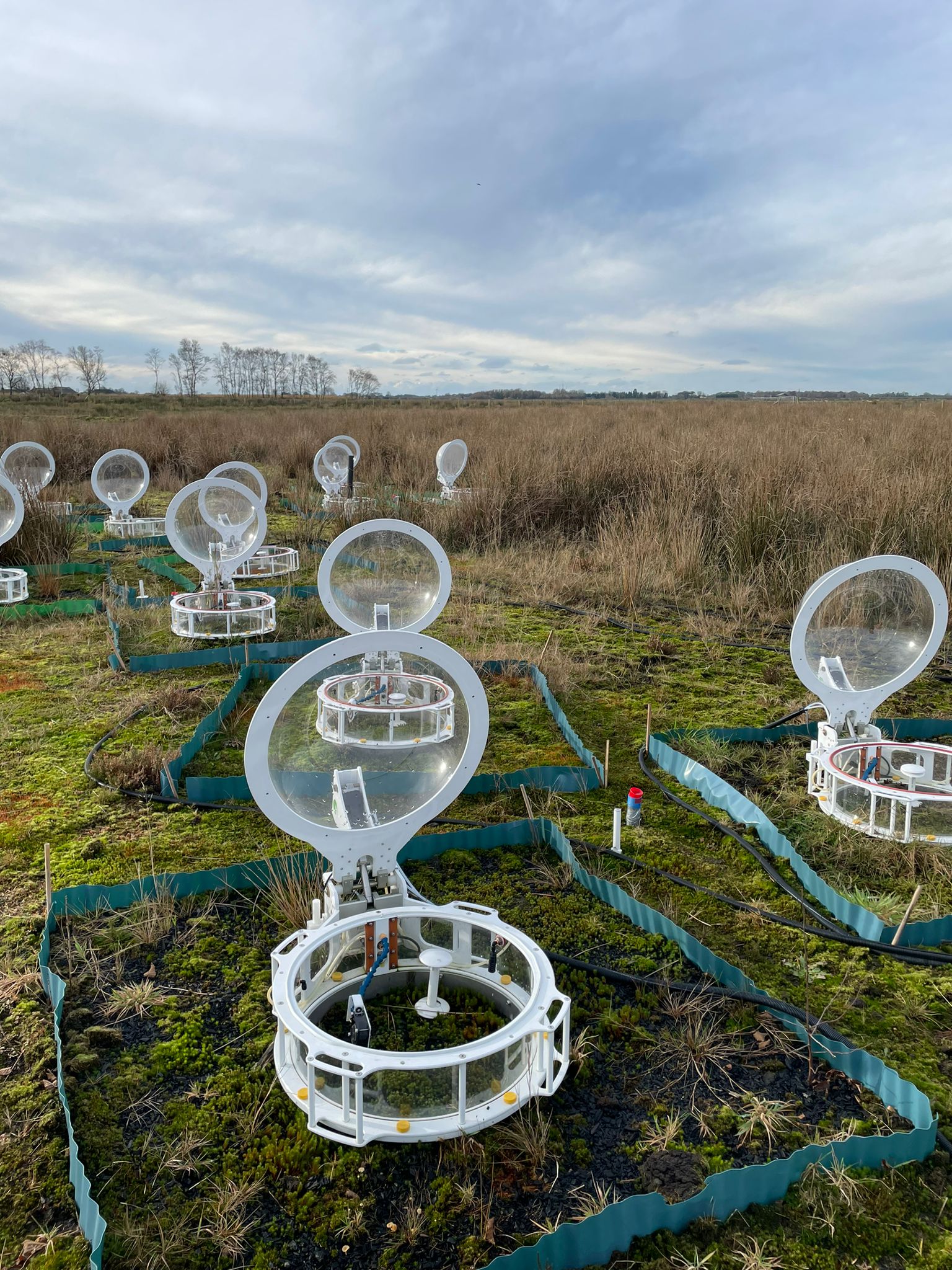
- Rewetting of peatlands reduces greenhouse gas emissions. Rewetting combined with the application of biochar has the potential to deliver substantial net greenhouse gas removal.
- The current biochar application limit set by the Environment Agency for arable land is 1 tonne/ha/year. Our research shows this can be safely increased to 10 tonnes/ha/year, with no evidence of heavy metals accumulation in soils.
- Crushed basalt rock, which is used in enhanced rock weathering, can be applied at a rate of 40 tonnes/ha/year with no heavy metals accumulation in soils.
- Perennial biomass crops for BECCS can deliver effective greenhouse gas removal in different locations in the UK and can do so much faster than tree-planting. However, planting in high-carbon soils should be avoided because the loss of carbon during the transition will take many years to reverse.
- The maintenance and harvesting of new woodlands must be undertaken sustainably. If it is not, the soil releases more carbon than is removed by tree growth, even over a period of 70+ years.
As the GGR-D programme wraps up its work over the next year, the research leads of the five Demonstrator projects and the CO2RE Hub have been reflecting on what has surprised them over the course of their work.
Dr Steve Smith, Executive Director of CO2RE, said:
“When we started, I thought that the different demonstrators were all trialling quite different approaches. What has surprised me is how many opportunities there have been to connect them together: restoring peat while also growing energy crops; locking up biochar in peat and in road surfaces, and applying rock dust to woodlands to boost trees as well as mineralise carbon. Smart ways to combine approaches like this will really help us maximise the opportunities from the land we have and bring down costs.
“Back at the start of the programme we wrote an article on what we saw as the six priorities for enabling removals. They included a clear national vision, public support, innovation, incentives, proper monitoring, and tools to guide project-level decisions. It is encouraging to look back and see progress on many of these fronts, though with more still to do.”
Professor Iain Donnison, who leads the PBC4GGR Demonstrator, also remarked on the potential for combining GGR methods:
“A really important legacy of this programme is that a network of academics and stakeholders with interest and expertise in GGR now exists, where it didn’t before. We’ve gained a much better understanding not just of the approach our project was focused on (perennial biomass crops), but perhaps more importantly, the potential for combining several GGR approaches at the same location. The extent to which land-based GGR approaches can contribute to the UK’s adaptation to climate change in addition to being an important tool for mitigation is now also much clearer.”
Professor Colin Snape, who leads the Biochar Demonstrator, said:
“Through our trials and stakeholder events, we were positively surprised by the level of knowledge on the potential benefits biochar that already exists within the farming community.
Additionally, while the benefits observed were highly site specific, we were nevertheless surprised by the extent to which crops and saplings were able to survive under severe drought conditions. Demonstrating that a safe biochar amendment level of 20 tonnes per hectare for arable land (equivalent to 40 tonnes of CO2 sequestered), which was not too surprising, as this only represents a small percentage of the soil mass.”
Professor David Beerling, David Beerling, who leads the Enhanced Rock Weathering Demonstrator, and Professor Ian Bateman, who leads NetZeroPlus, emphasised the encouraging results of their projects’ research and the potential the methods they have studied hold for helping the UK to meet its climate goals.
Professor Beerling said:
“Our UKRI/BBSRC-funded demonstrator, which established major enhanced rock weathering (ERW) field trials for the three dominant agricultural land uses in the UK – arable, lowland grassland and upland grassland – integrated with public engagement, highlighted the great potential of this technology to sequester CO2 and assist the UK in its net-zero by 2050 commitment.
We demonstrated promising rates of carbon capture with no adverse effects on yields and, in the case of the upland grasslands, the potential to switch the system from a source of CO2 to a CO2 sink. Going forward, gaining the long-term perspective on the performance of this technology across different land uses is crucial to understanding its effectiveness.”
Professor Bateman said:
“Cutting edge AI-enhanced decision support systems have shown a truly amazing capacity to bring together the natural, physical, economic and social sciences required to address real world problems such as food security, climate change, biodiversity restoration, water pollution and flooding. Until now decisions have been made as if each of these issues could be tackled separately. Now they can be addressed using decision support tools software on a policymaker’s desktop, which recognises that, in reality, these challenges are linked together, and that accepting this is the first step to securing a future for everyone.”
The research leads have also been sharing their perspectives on future challenges and what they think the most important factor is for helping GGR scale in the UK.
Professor Colin Snape said:
“The Biochar demonstrator has addressed all the uncertainties across the entire value chain that might limit the contribution biochar will make to the 2050 GGR target. These include feedstock supply and classification and what level of deployment is realistic and where, guided by the largest coordinated deployment programme of biochar in the UK. The greatest challenge is policy and regulation where an effective and responsible framework is required that encourages biochar deployment both for use in agriculture and aggregates.”
Dr Steve Smith says that infrastructure is key:
“If I had to pick one factor right now, it would be to ensure that the infrastructure for transporting and storing CO2 gets built in the UK. This has been started in industrial clusters in the North East and North West. But it is often talked of only as a way to reduce emissions from continued fossil fuel use. Actually, it also opens the door to capturing CO2 from the air, and that will be increasingly important in the coming decades.”
For Professor Ian Bateman, telling the truth about climate change underpins everything else:
“The number one issue is to tell people the truth: environmental problems are accelerating so fast that if we don’t tackle these problems now then WE (not some abstract future people) will pay the cost – and it will far outstrip the cost of acting now. In fact, moving first will help our economy with cheaper, more reliable energy as well as a better standard of living into the future.”
Download the report to explore the findings. You can also watch our series of short documentaries to learn more about the work of the GGR-D programme.
Top image: Greenhouse gas flux measurement over biochar-amended plots on a lowland raised bog in Lancashire. Credit: Jenny Rhymes.