By Helen Bunting, CO2RE Communications Manager
“When the seeds of this event were planted at the start of the CO2RE Arts initiative, back in December 2024, we couldn’t have imagined what was to come”, said Natasha Martirosian, CO2RE Researcher and Flexible Fund Manager.
In the end, more than 1,000 people joined us at the University of Bristol Botanic Garden for our Reclaiming Hope, Removing Carbon event, taking part in four inspiring days of art, science and reflection.
The event marked the culmination of CO2RE’s arts initiative, which saw seven artists from around the UK commissioned to make work exploring the power and potential of greenhouse gas removal (GGR). Their projects encompassed animation, video installations, performance pieces, biochar sculptures, audio storytelling and documentary filmmaking. In the Botanic Garden, their work came together with scientific demonstrations and talks by researchers working on GGR, as well as reflective and family-friendly activities. The artworks were exhibited along a curated arts trail, so visitors could go at their own pace and experience each installation before having the chance to talk to scientists about what they’d seen and learn more through demonstrations of GGR methods.
The garden provided a context that was completely different from a gallery space, viscerally connecting the artworks to nature. Our opening evening included the first of three Boggy, Gassy, Bubbly performances by Miranda Whall. In a woodland clearing alongside the garden’s large pond, Miranda and her artistic team translated real-time data from a degraded peat bog into sonic and visual performance to give the peat a “voice”. The chilly, wet and windy conditions during her first performance made it easy to imagine a damp evening in the Welsh uplands where she originated the work. Watch Miranda talking about her project here.
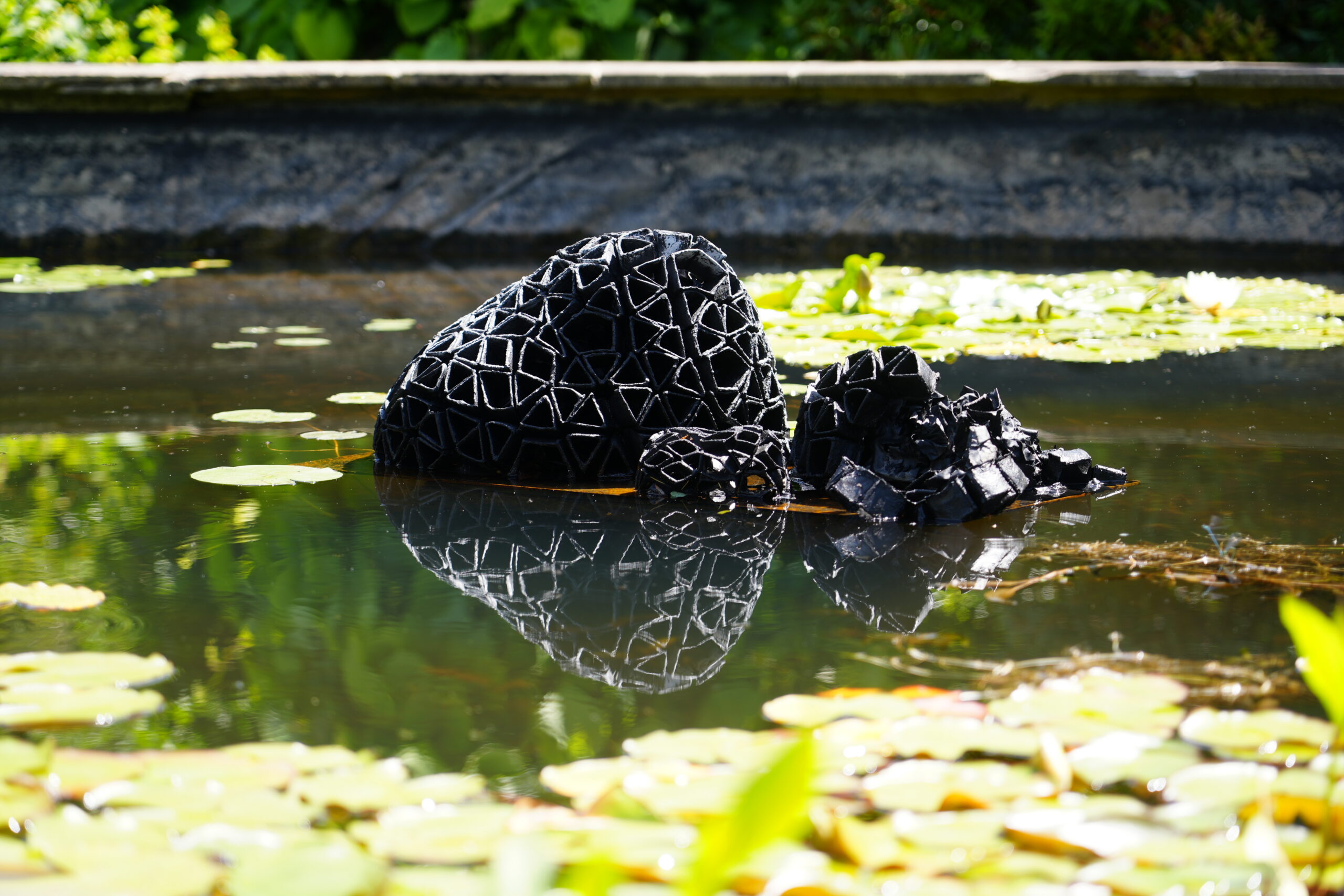
Billie Ireland’s Sacred Carbon biochar sculptures were placed in the garden’s carboniferous forest and in the lily pond, their slow disintegration reflecting the cycle of life and death. The sculptures in the forest were encased in tall glass tubes that mirrored the abundant horsetails present among the trees. “It gave me a chance to think differently to an outdoor space than my usual carbon sequestration land art”, Billie said. “It pushed my practice into a new experimental science–ecology–art research space.”
Yambe Tam’s meditative film on imagined future purification rituals, The Rite of Ten Winds, was shown in the Chinese Medicinal Garden. Guests walked up to the screening through a pergola draped with printed cloths and sat on pebble cushions to watch the film, surrounded by foliage.
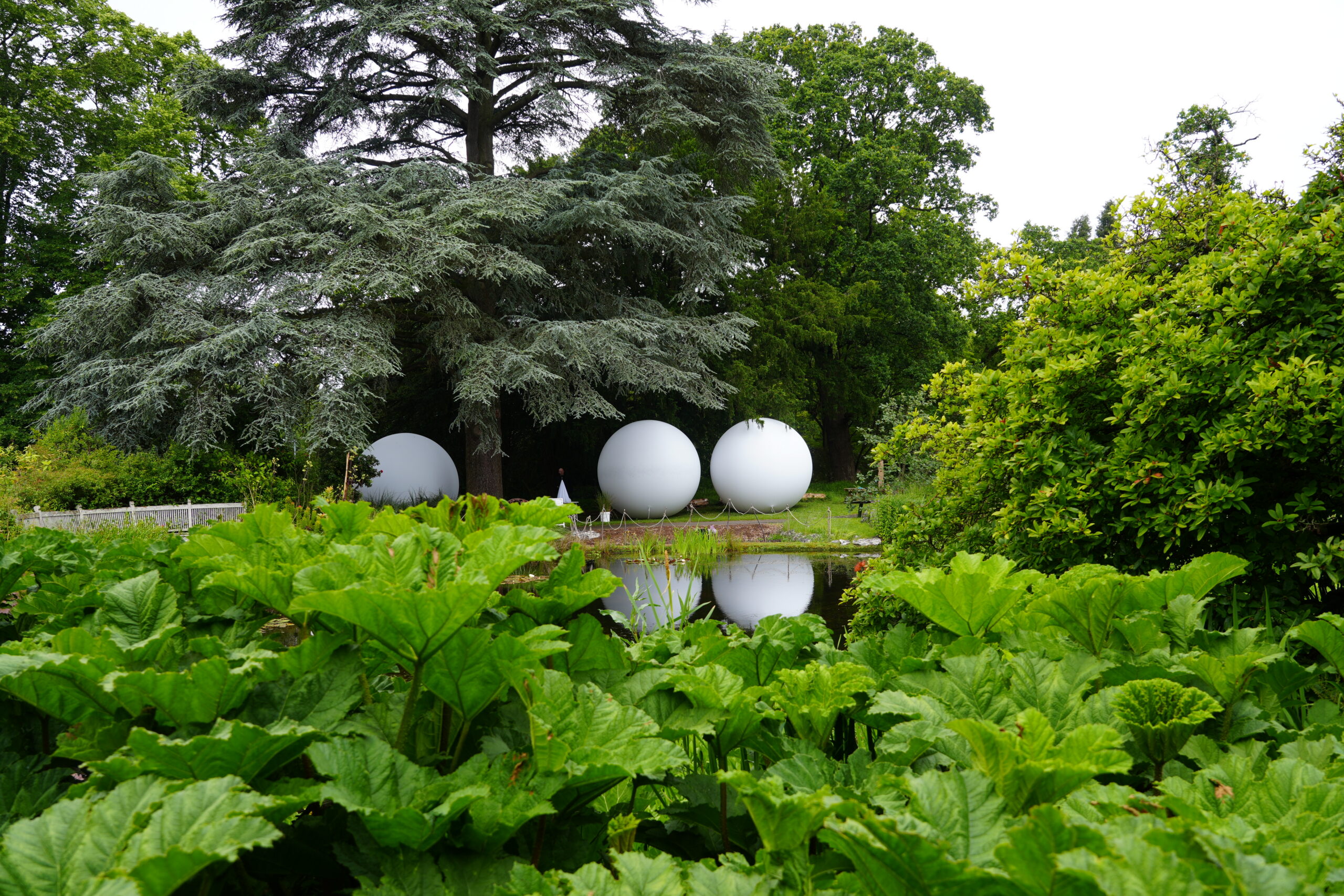
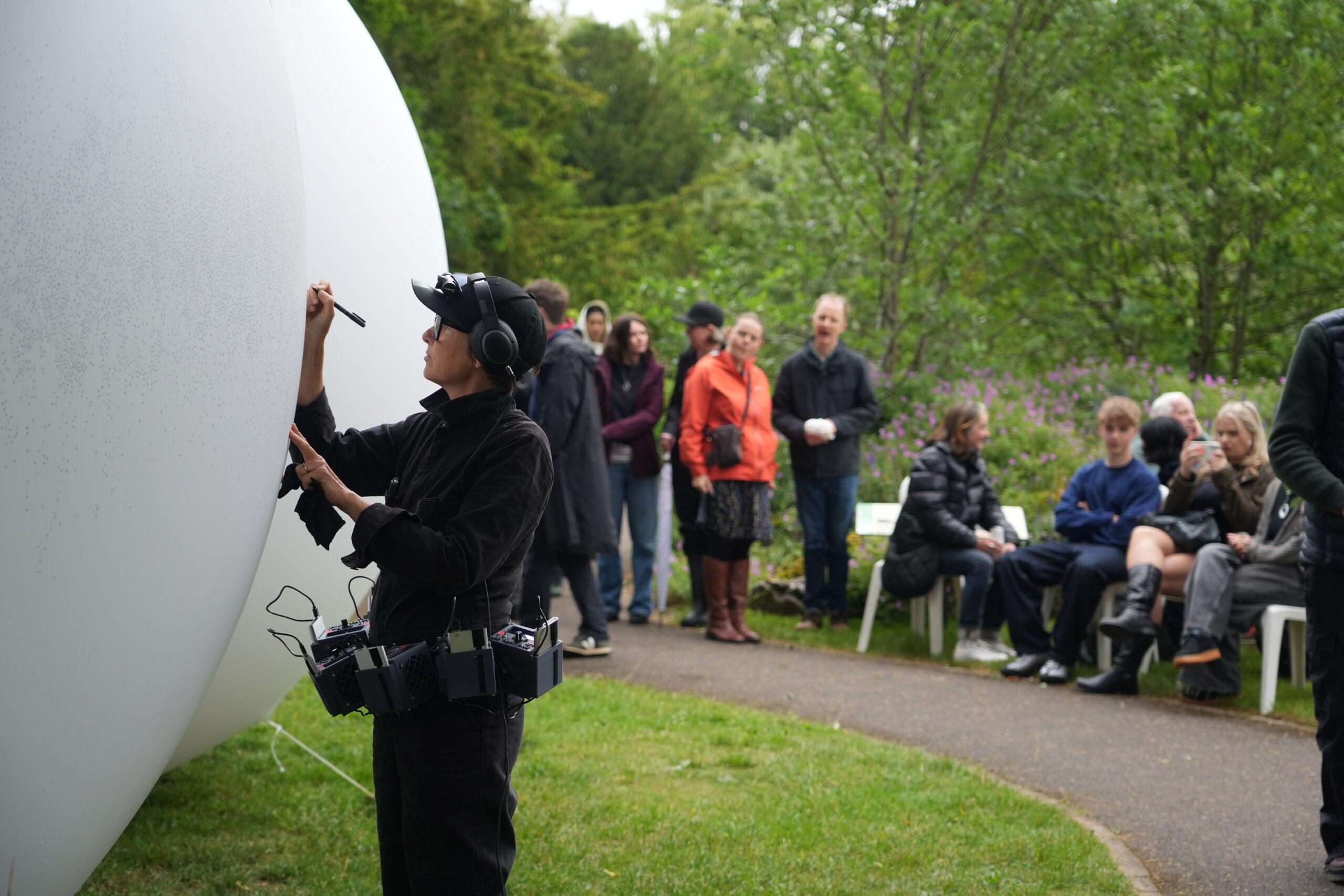
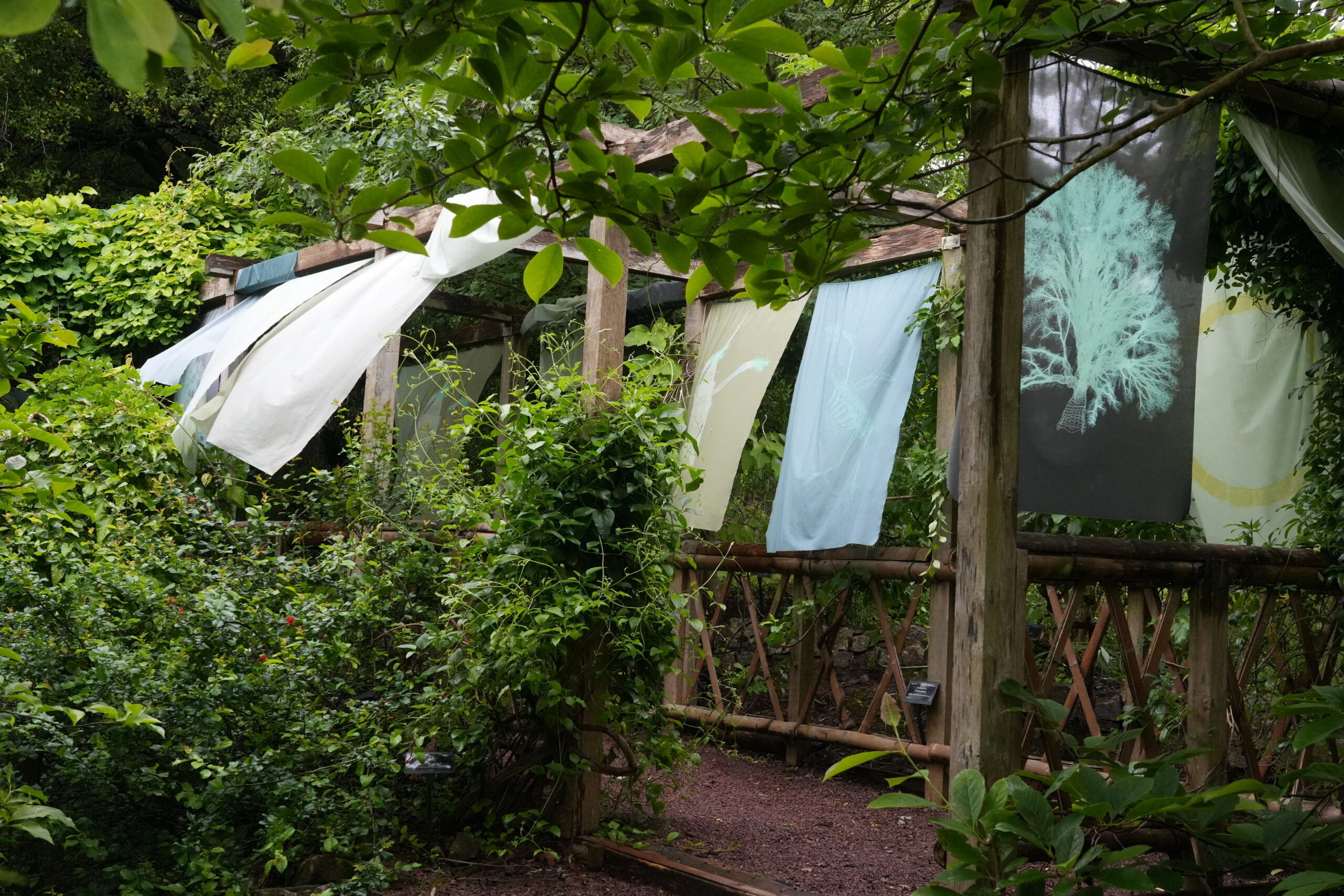


Photos: 1. Miranda Whall’s giant bubbles for her “Boggy, Gassy, Bubbly Performance”. 2. Miranda Whall performs. 3. The setting for Yambe Tam’s film, “The Rite of Ten Winds”. 4. Two people watching Yambe Tam’s film.
A roundhouse with a conical thatched roof played host to Selina Wagner’s trailer of her animated film The Day We Cleaned the Sky, set 500 years into the future. The interior of the roundhouse was decorated with illustrations from the film, plus dozens of paper swifts suspended on wires from the ceiling. Swifts are key motif in the animation, representing a clean sky. The final film will be shown at an event in Stirling in August. Watch this video of Selina talking about her project.
When it was raining and windy (and later, hot), guests could duck into one of the garden buildings to watch a bilingual Welsh and English film by James R Price and the Ffilm School collective called this Land to come. The film asks probing questions about the potential impact of GGR on the landscape and the people living in it. Guests also had the opportunity to watch A Boggy, Gassy, Bubbly Ensemble (part one), a film similar to Miranda’s live performance.
Audio producer Ben Weaver-Hincks worked with five storytellers to develop Pathways: A Possible Futures Podcast. Each podcast was loaded onto a listening device and placed at different points around the garden with background information, giving visitors the opportunity to sit and listen to the stories. The listening devices were all older (iPods, Walkmans and even cassette tapes!), encouraging a slower experience.
Over in the glasshouse, Andrew Stone and Jon Somerscales of Studio Blue Green exhibited their video installation Phycologica in the semi-tropical zone. The installation was developed out of their work with bioluminescent, breath-activated algae. Visitors walked through the warm, humid zone, surrounded by tall tropical plants and the sound of the video’s narration. On the screen, bioluminescent algae popped up, swirled and disappeared again. Watch Andrew talking about Phycologica in this video.
All of this came together in a panel discussion on environmental art led by Bristol-based artist and researcher Dr Katy Connor. Prompted by Katy, the artists talked about what inspired them to make the work they brought to the garden, the challenges of depicting GGR in an artwork – and of exhibiting in the garden – and how they incorporated the sights, sounds and textures of nature into their work.


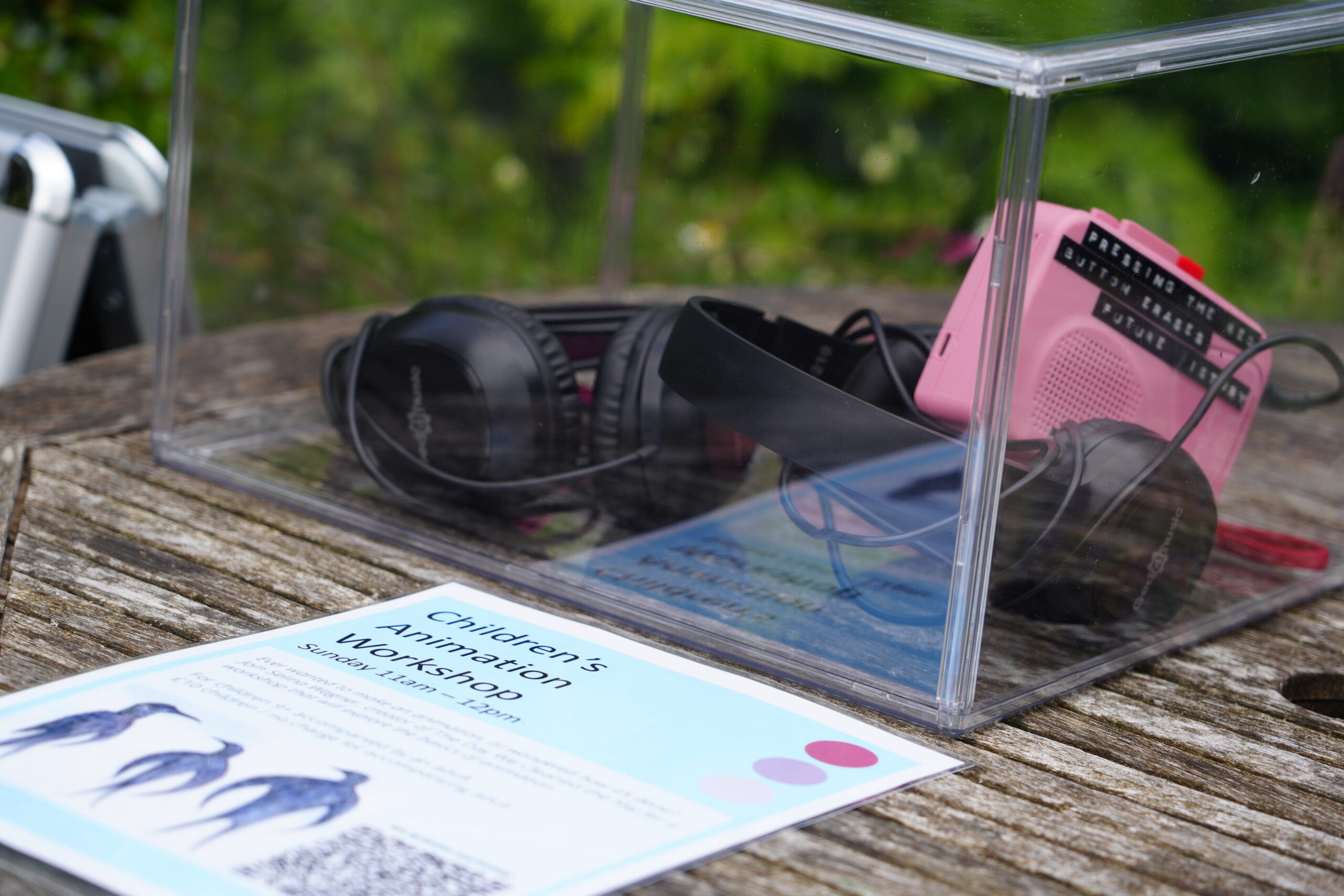
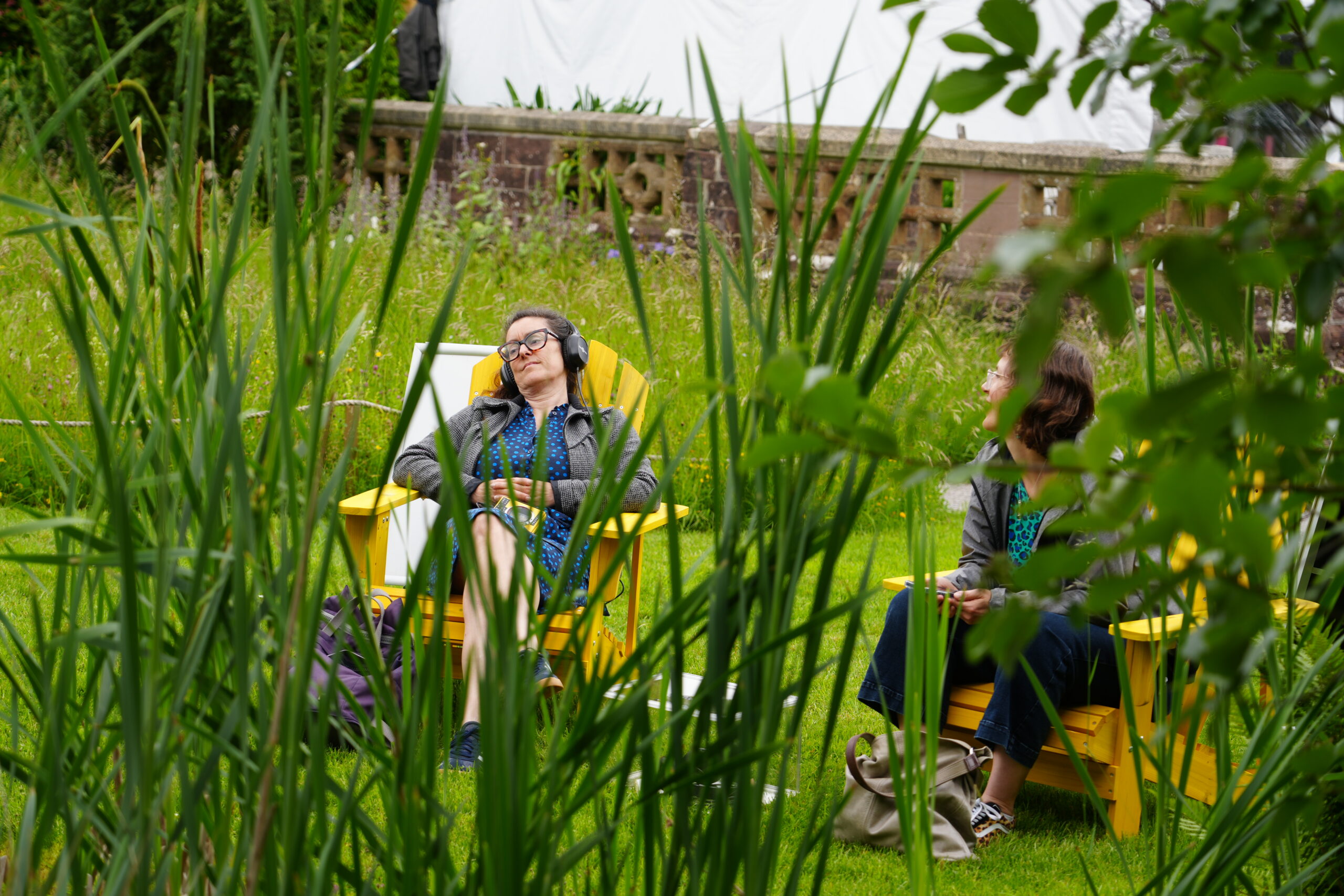


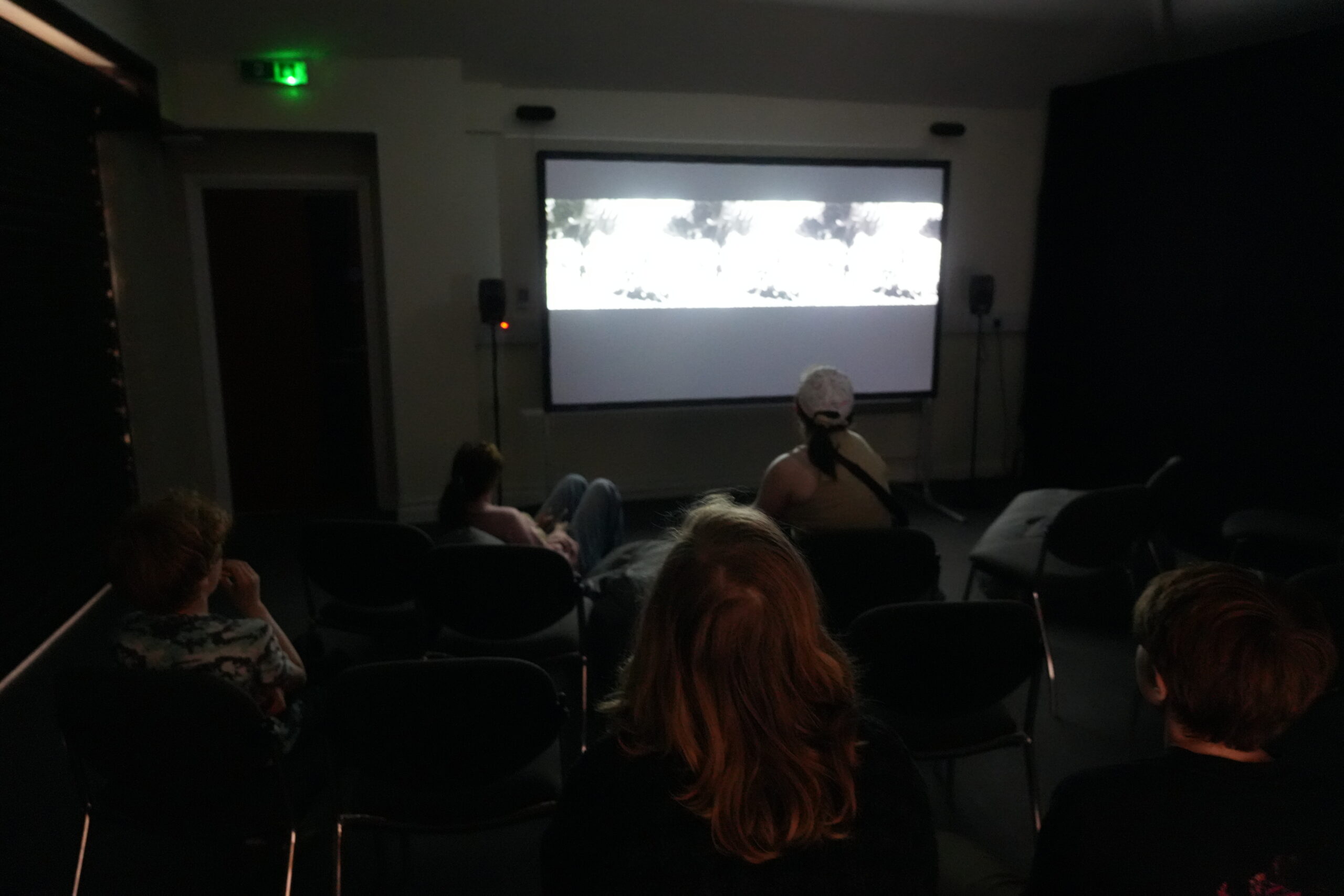
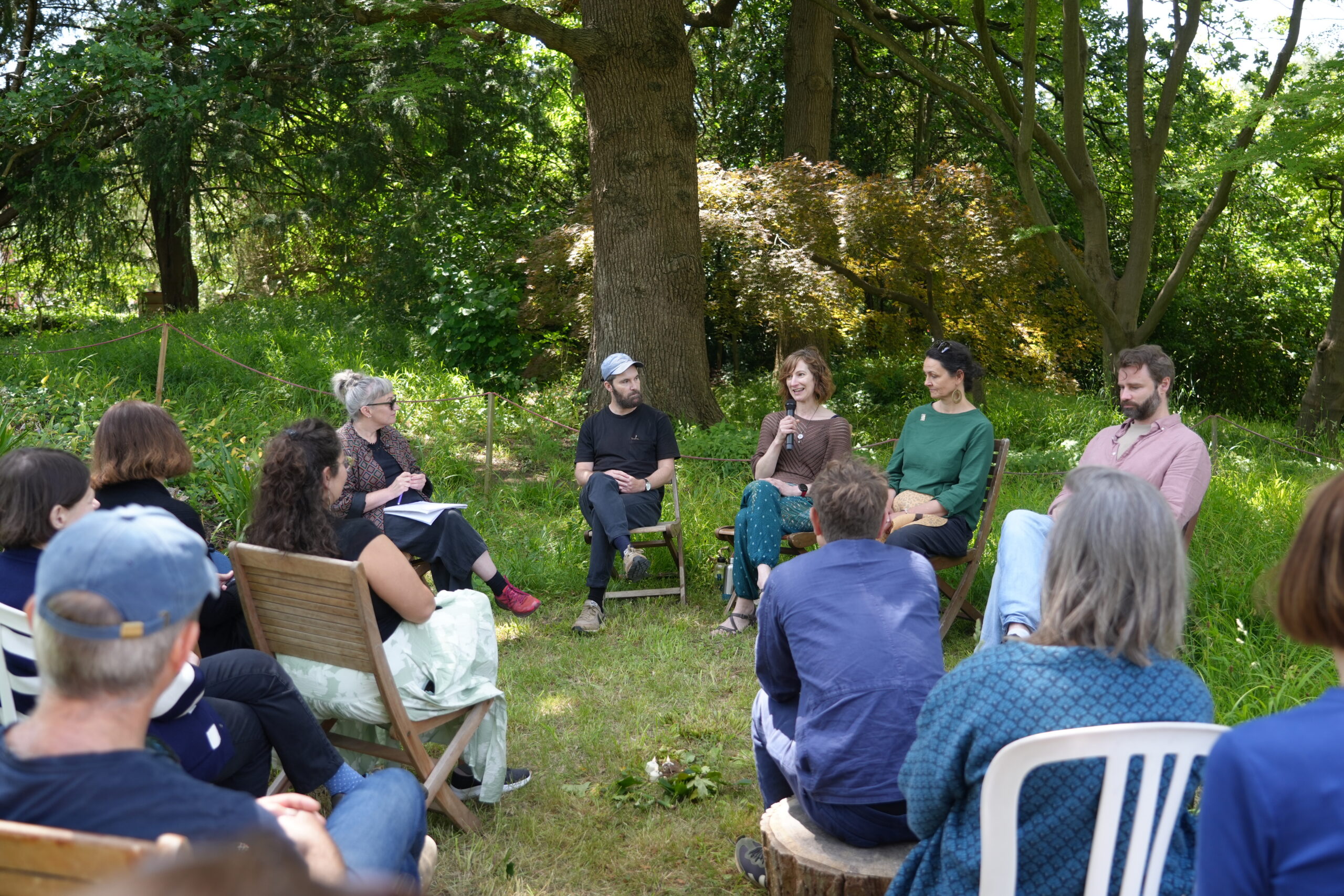

Photos: 1. A visitor watches the trailer for Selina Wagner’s animation, “The Day We Cleaned the Sky”. 2. Paper swifts are suspended from the conical roof in the roundhouse where Selina’s animation was exhibited. 3. Older listening devices loaded with one of Ben Weaver-Hincks’s “Pathways” podcasts. 4. Visitors listening to Ben’s podcasts. A visitor watches Studio Blue Green’s video intallation in the glasshouse. 6. Studio Blue Green’s video installation. 7. James R. Price and Ffilm School’s “this Land to come”. 8. Visitors watch “this Land to come”. 9. The environmental art panel, led by Dr Katy Connor, with the artists as panellists. 10. The environmental art panel.
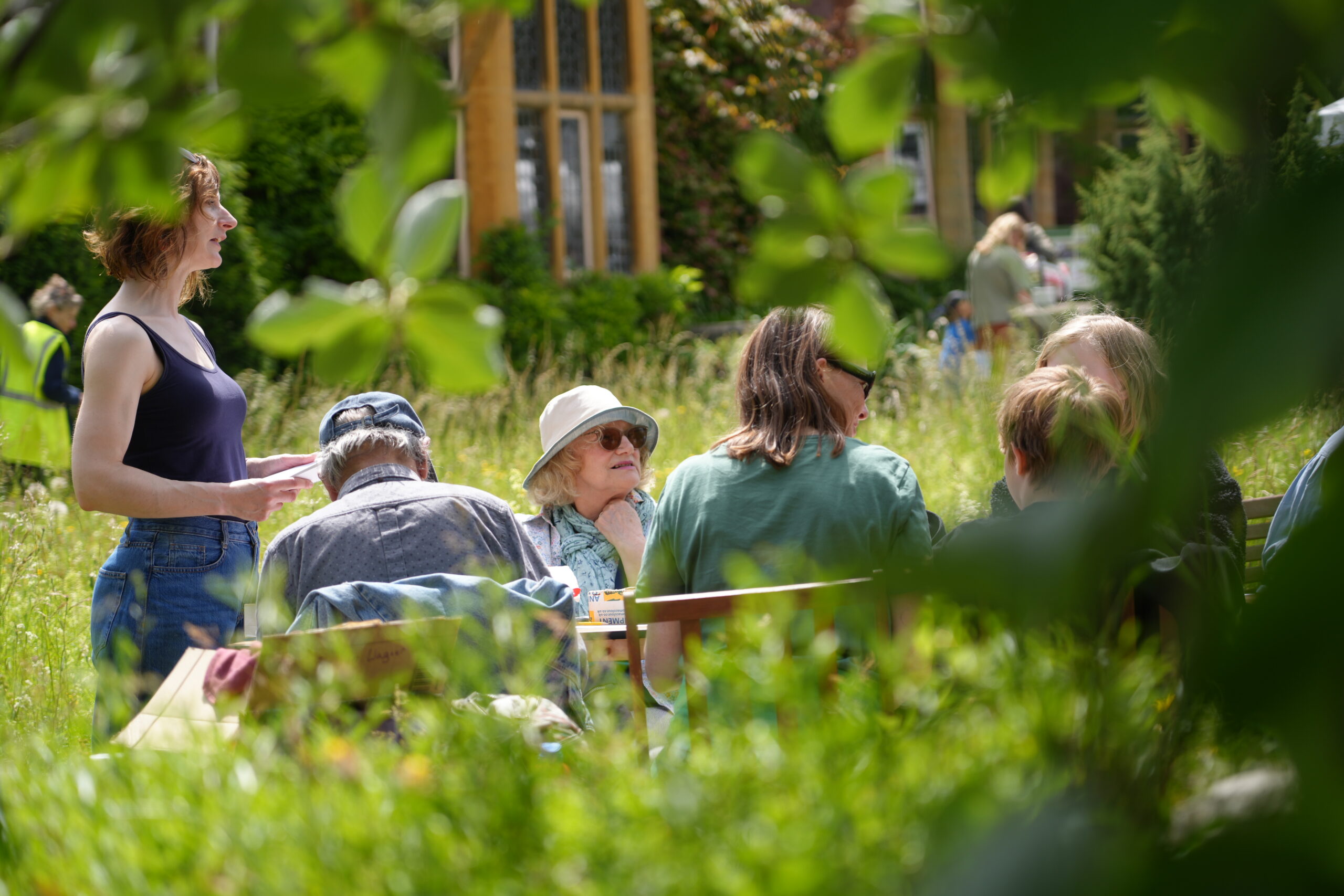
Along with the artworks, conversations about the science behind GGR, and why GGR is necessary to help us limit global warming and reach net zero as part of a portfolio of actions, were key to the event. Researchers from CO2RE, the Greenhouse Gas Removal Demonstrators programme and the Future Leaders Network volunteered their time to talk to visitors about their work, giving demonstrations of GGR methods and holding “Meet a Scientist” talks in a beautiful woodland area in the garden. These relaxed, intimate talks were an opportunity for visitors to hear from scientists with long experience of working on climate change and ask them questions directly. Alyssa Gilbert (CO2RE and Undaunted), Dr John Lynch (Agile Initiative, Oxford), Tim Kruger (Origen) and Professor Jo House (CO2RE) all sat down to talk to members of the public about GGR, why it’s needed, how climate research and discourse have developed over time, and what we can do personally to help with climate change efforts.
As Natasha explained, the original goal of the event “was to showcase the art projects/installations delivered through” the CO2RE Arts initiative. “However, as it evolved and we…saw the impacts of climate helplessness on younger generations, the idea and aim grew into a festival. A place where science meets the arts, hope meets reality, and people are able to engage with greenhouse gas removal on a deeper level, encompassing the CO2RE and UKRI value of engaging with communities, and increasing public knowledge and understanding of cutting-edge science.”
Dr Will Macalpine, a researcher with the Perennial Biomass Crops Demonstrator project, said: “What really motivated me to take part was the opportunity to deliver impact from our PBC4GGR project research, and I thought the combination of science and art within the beautiful setting of the Botanic Gardens was a brilliant way to do that…by the time people came to speak to the researchers (having toured the gardens and art installations), they were curious, engaged and open, which made for some really meaningful conversations…I’ve worked with social scientists and economists to deliver research impact before, but this was my first experience collaborating with artists, and it genuinely led to some of the most engaging and accessible conversations about greenhouse gas removal I’ve had.”
Something that was important to us was to engage visitors of all ages. The garden is popular with a wide variety of Bristol-area residents, and over the course of the event we welcomed everyone from retired people to very young children. We wanted them to have plenty of opportunities for participation, discussion and questions. Emily Swaddle of the Future Leaders Network hosted various events for visitors, including a Carbon Cleaners game that got kids and their parents running around the Guangzhou Garden lawn. Billie Ireland delighted guests with talks on how she makes and uses biochar in her art. Not only did they have the chance to handle biochar samples, but they also got to watch her demonstrate how she creates it in her Dartmoor Dragon retort. Selina Wagner’s animation workshop offered another opportunity for visitors to get involved. Both young and young-at-heart guests joined her to learn all about the basics of hand-drawn animation and try it for themselves in the Sunday sunshine.
Billie said: “It was such a joy to talk to so many of the public… [there were] so many fabulous and meaningful conversations between CO2RE science, the public, community, plant experts, young CDR innovators and other artists. It was a very special, inviting space for all these conversations and connections to flourish…With a dose of culture, science and a public space where families and communities feel safe, a sense of hopeful agency can happen.”
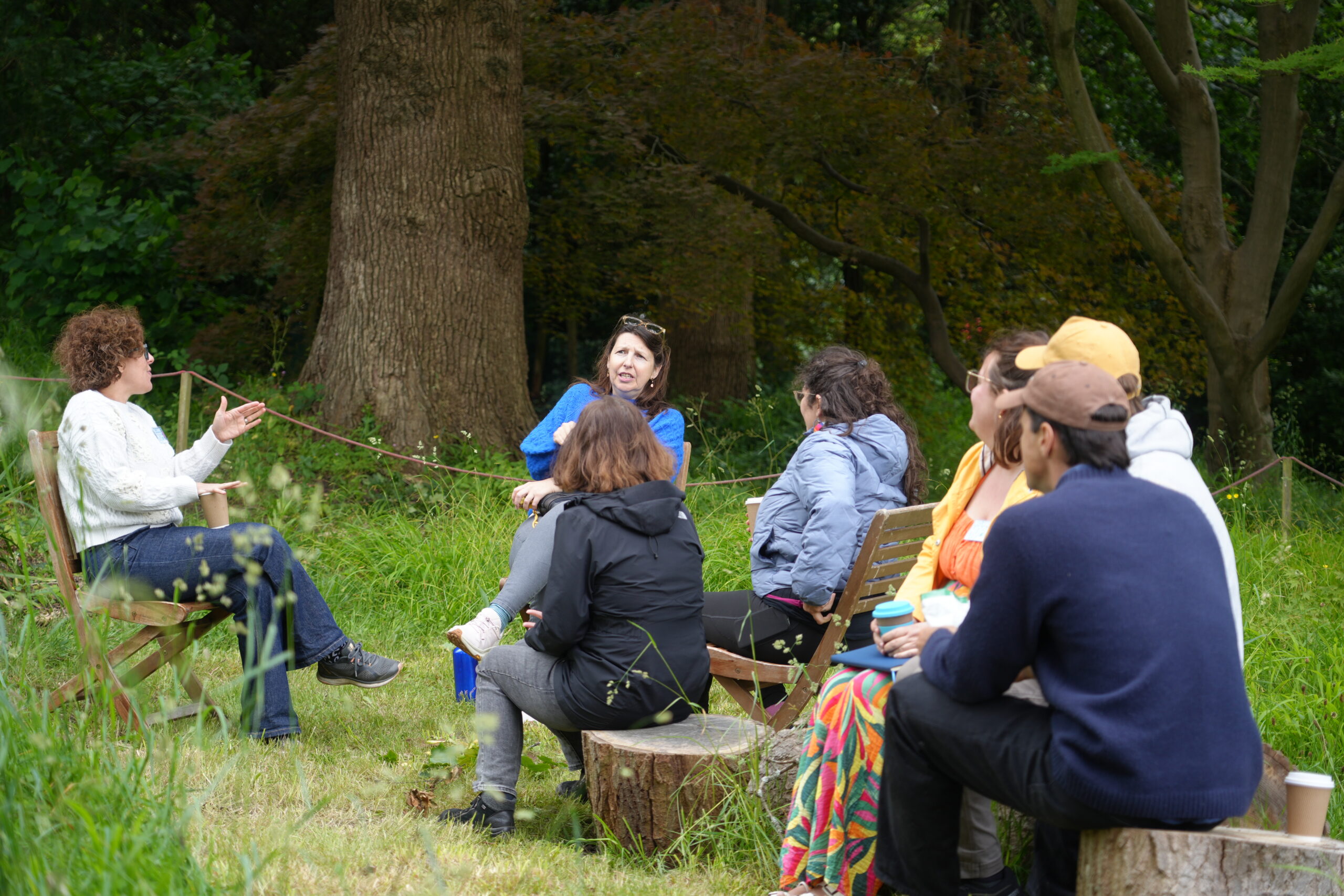

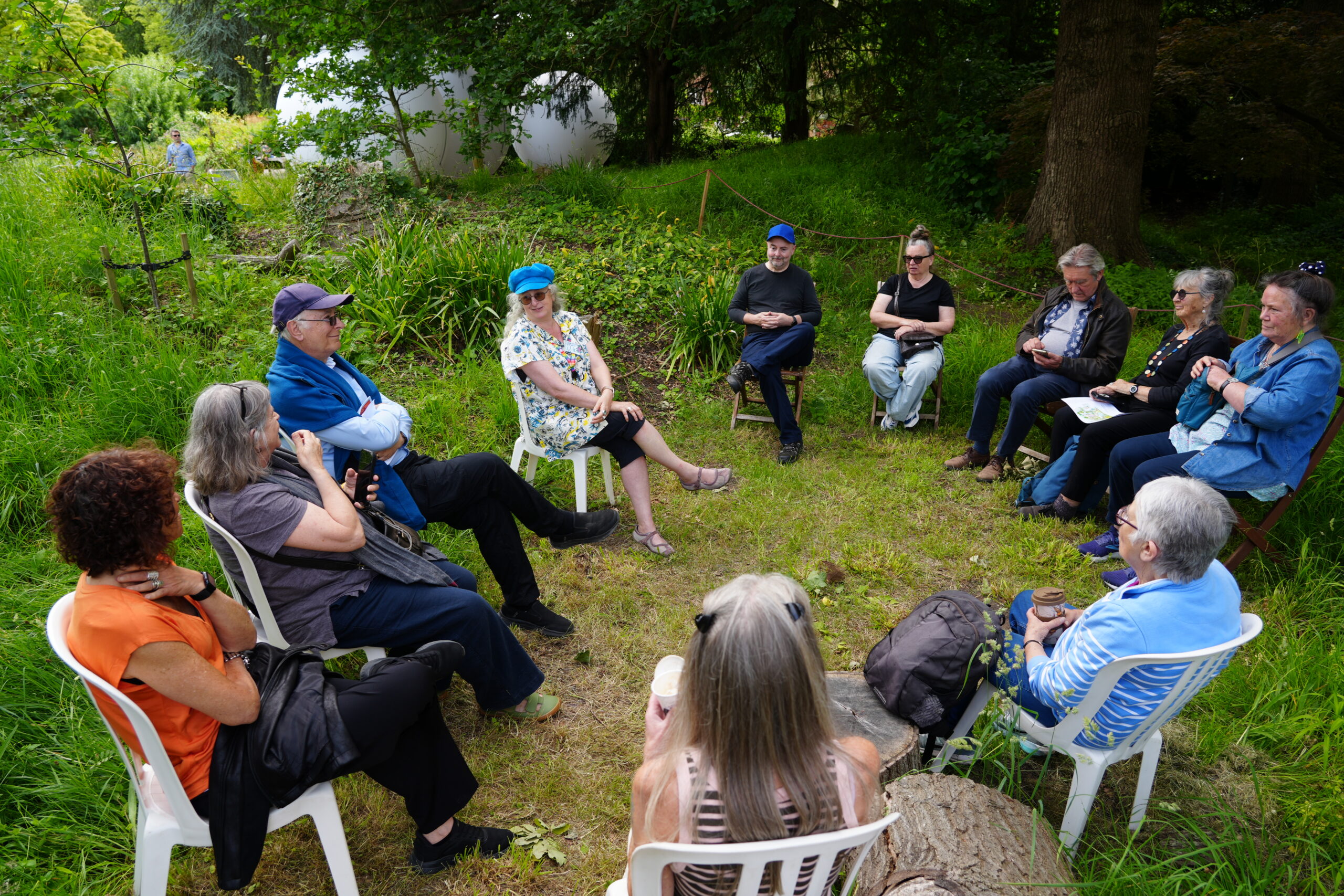
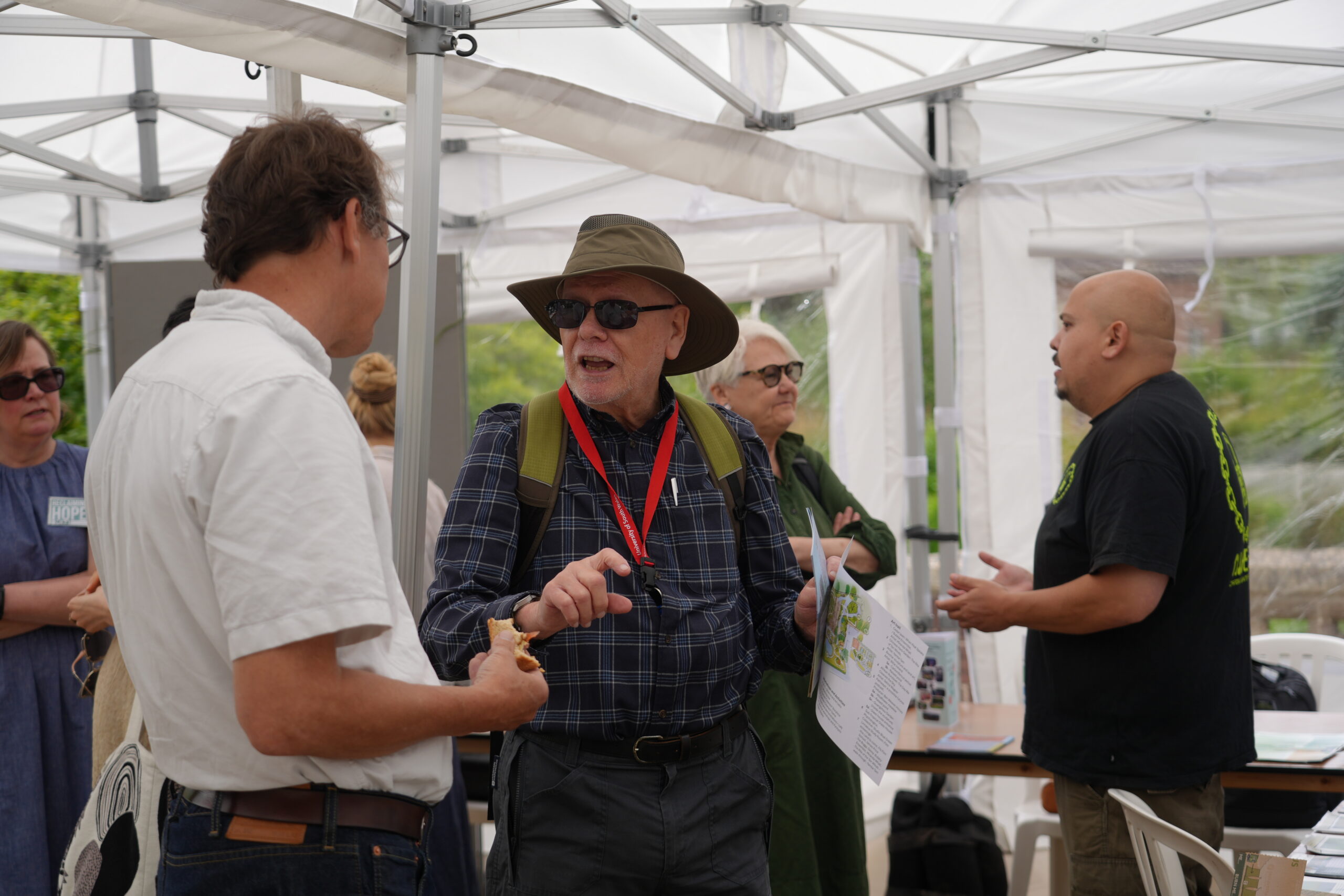

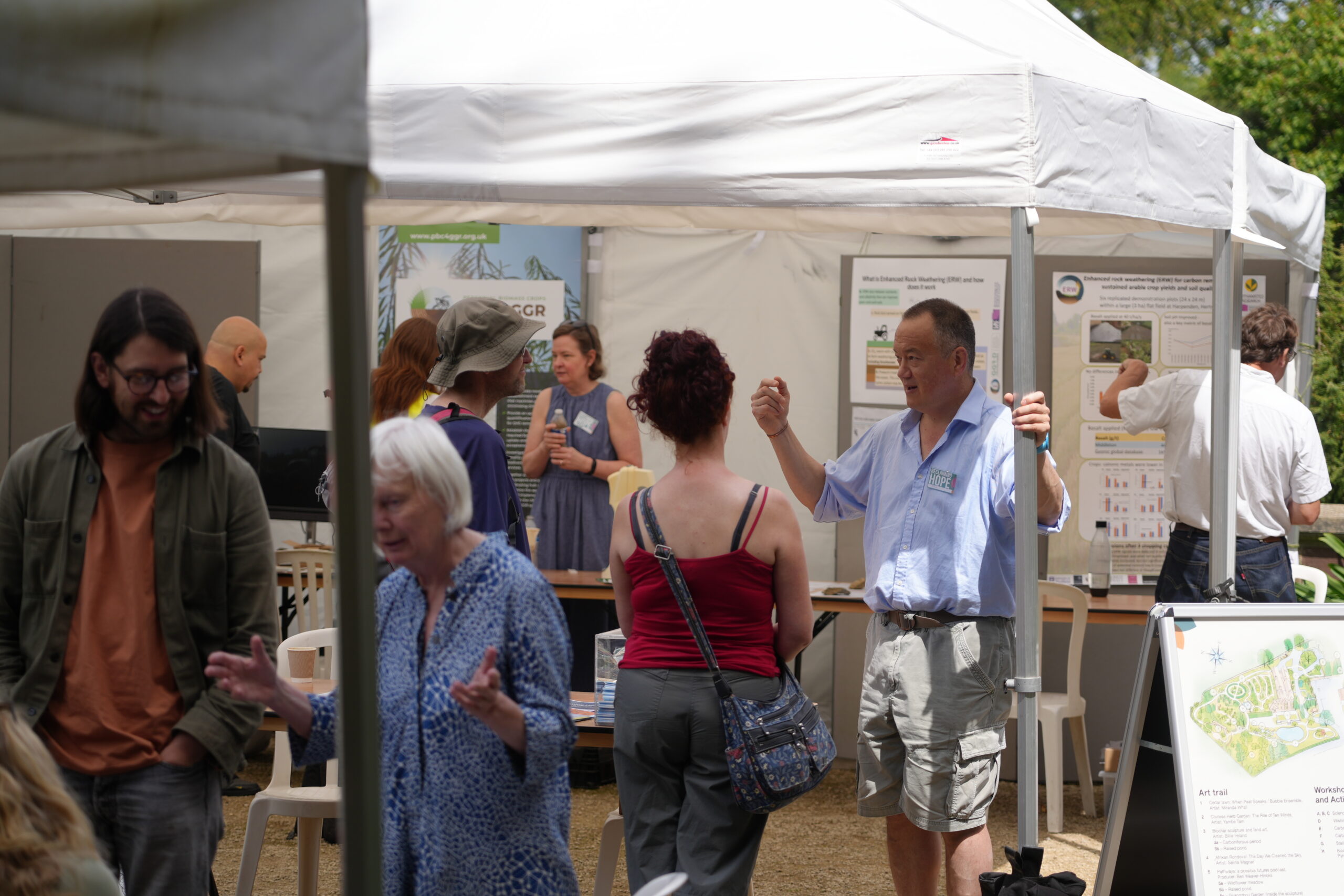
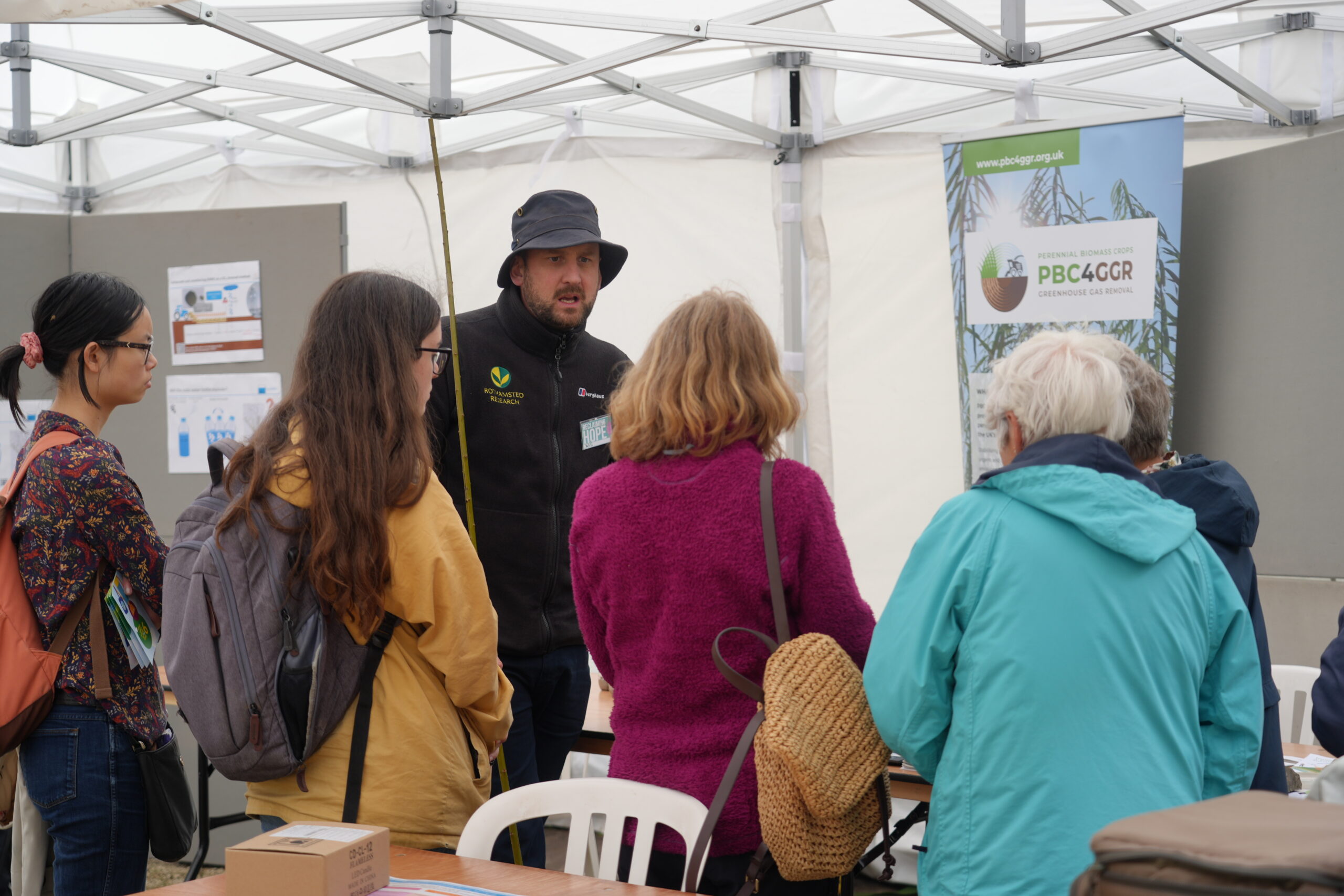
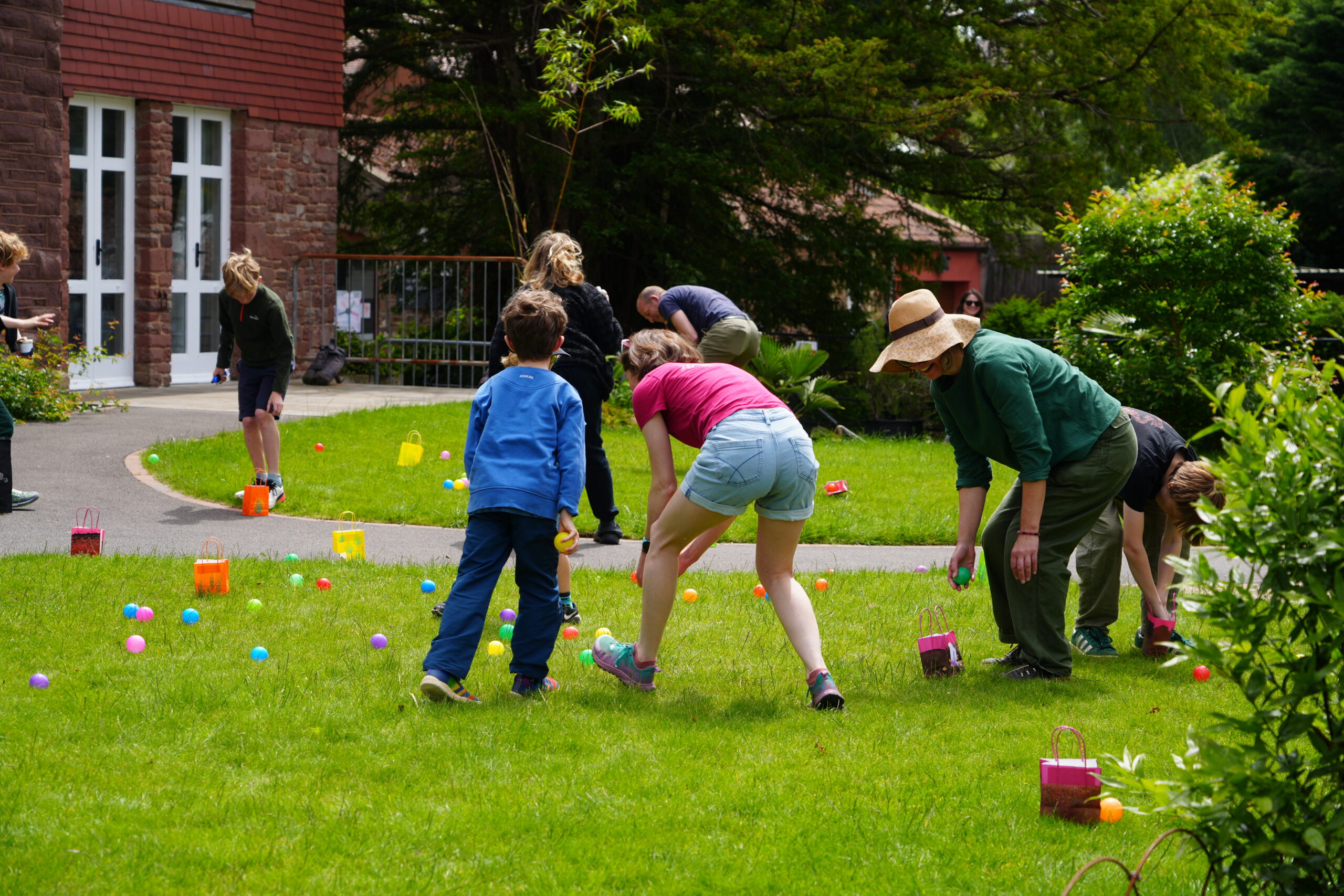
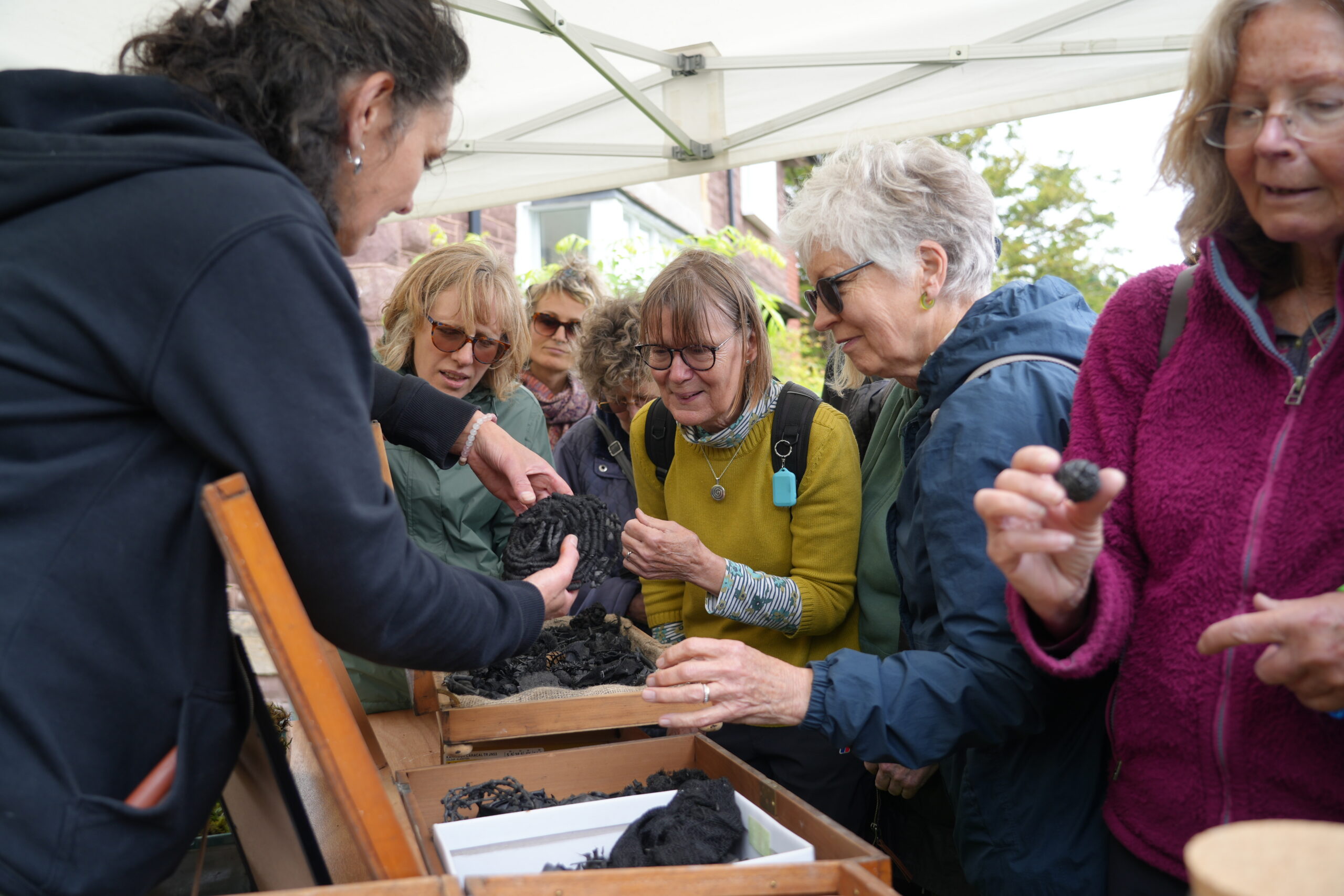
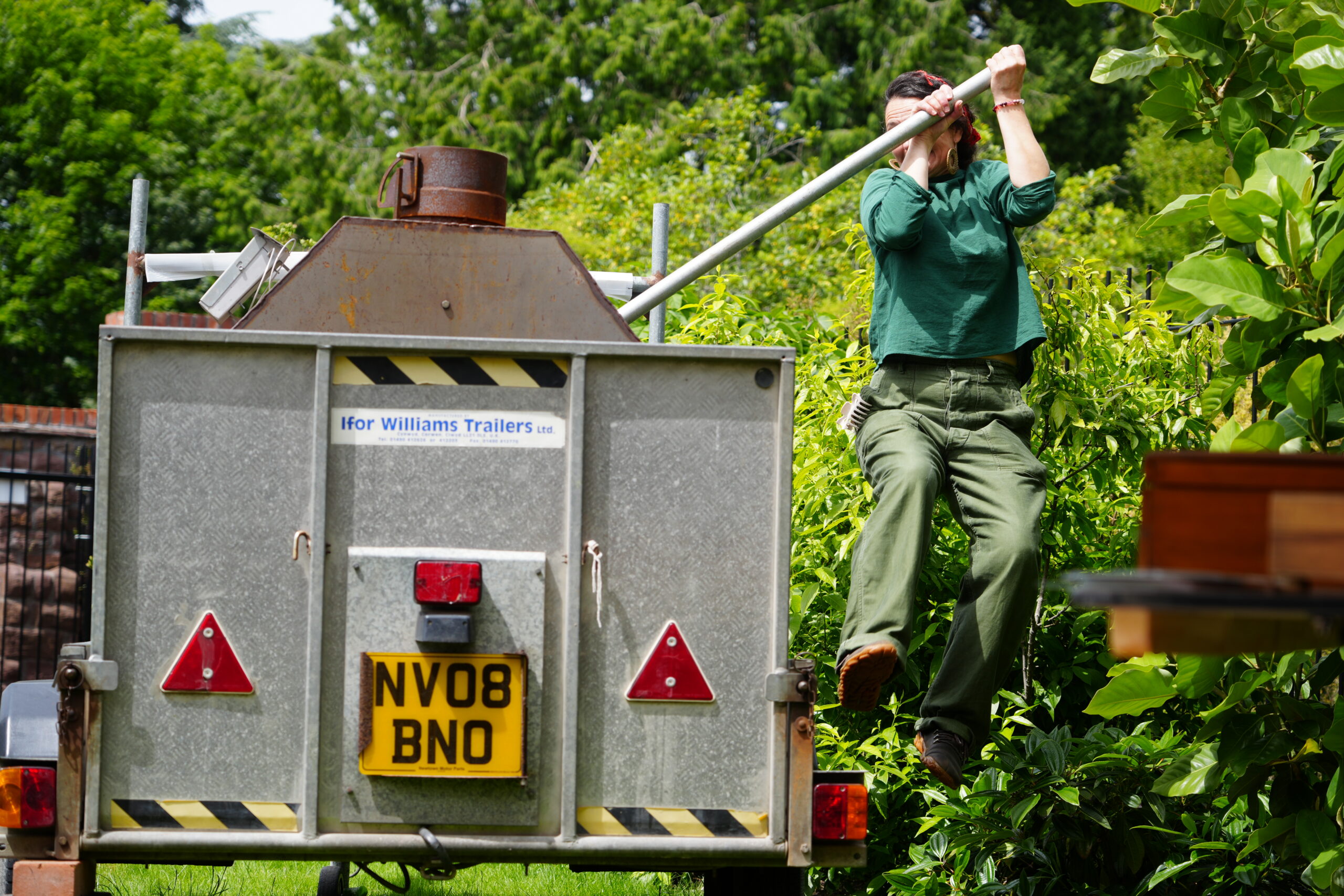
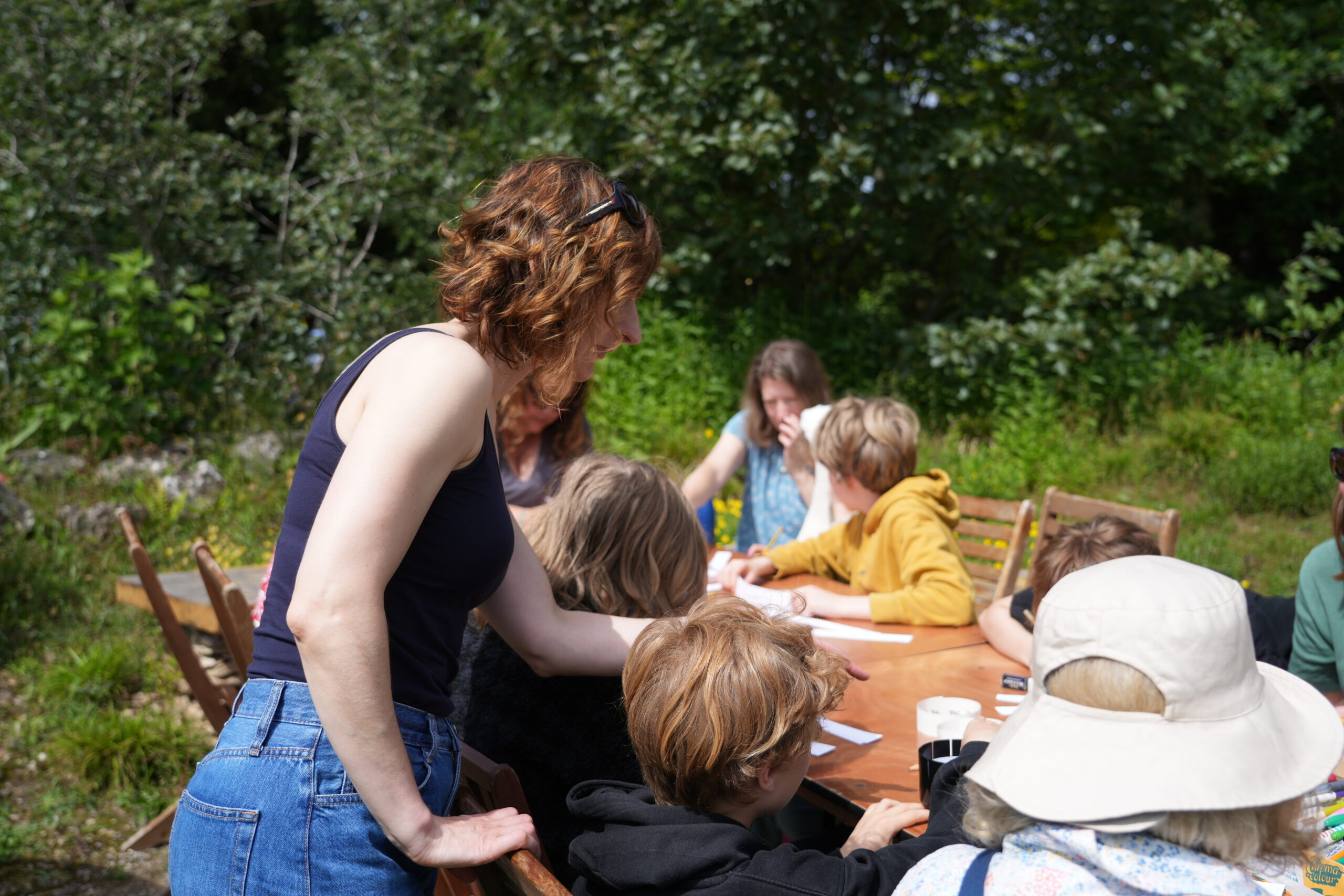


Photos 1, 2 and 3: Alyssa Gilbert, Tim Kruger, Dr John Lynch and Prof Jo House speak to visitors during their “Meet a Scientist” talks. Photos 4, 5 and 6: Dr Stephan Haefele, Dr Evangelos Mouchos, Giorgio Graffino, Dr Will McAlpine and Dr Mark Workman speak to visitors in the “science communication” area. Photo 7: The “Carbon Cleaners” game. Photos 8 and 9: Billie Ireland talks to visitors about biochar and demonstrates how she uses her Dartmoor Dragon retort to make it. Photos 10 and 11: Selina Wagner’s animation workshop. Photo 12: the Wishing Tree holding wishes written by visitors.
By siting exhibitions in a garden like this, and engaging the public on GGR with demonstrations and talks, we hoped to encourage people to think about how GGR can play a role in protecting the environment we all depend on.
We were privileged to collaborate with the fantastic and knowledgeable team at the Botanic Garden, including Senior Horticulturalist Andy Winfield. Andy said: “It was a real pleasure to host Reclaiming Hope, Removing Carbon here in the Botanic Garden. The art worked so well among the plants, and visitors responded to the exhibits with real interest. Hosting events like this is incredibly important to us; presenting complex research in an accessible way through art, workshops and discussion shows how this type of engagement can bring a little hope to visitors as well as leaving with a greater understanding of greenhouse gas removal.”
We would like to extend our heartfelt thanks to everyone who attended our event, to all of the wonderful artists, to the volunteers who helped us run the show and shared their scientific expertise, and to the Bristol and Oxford staff who put in so much effort to make it a success. Thank you to Nick Wray, Botanic Garden Curator, for his support and to him and Professor Judith Squires, Deputy Vice-Chancellor of the University of Bristol, for their remarks on our opening evening. Thank you to all of the amazing team at the Garden. And thank you to Natasha Martirosian, who led the event, and to Dr Paul Rouse, for your vision and leadership.
If you’d like to view more images from the event, head to our Flickr page.
All photos by Hanieh Shabahang.