By Steve Smith MBE, CO2RE Executive Director and Arnell Associate Professor of Greenhouse Gas Removal
After five and a half years, the CO2RE project has officially drawn to a close. As the UK’s national research hub on greenhouse gas removal (GGR), CO2RE formed part of UKRI’s flagship Greenhouse Gas Removal Demonstrators programme, working alongside five major projects testing different GGR approaches around the country.
Back in 2021, Cameron Hepburn and I wrote an article for The Conversation setting out six priorities for pulling carbon out of the air: a clear vision; public support; innovation; incentives; effective monitoring, reporting and verification; and better decision-making. These six priorities essentially mirrored the workstreams we put in place for CO2RE.
This seems a good moment to reflect not only on what CO2RE achieved along these lines, but also how the wider landscape has changed since then.
A vision coming into focus
When we started the programme in 2021, the UK had a legally binding net-zero target but much less clarity about the role that GGR should play in getting there.
Later that year, the Government published its Net Zero Strategy, including – for the first time – a dedicated chapter on GGR. Since then, removals have become a more explicit part of national climate strategy.
The Climate Change Committee’s Seventh Carbon Budget advice was particularly significant. Its detailed pathway to net zero added biochar and enhanced rock weathering alongside more established GGR approaches such as woodland creation, soil restoration, bioenergy with carbon capture and storage (BECCS) and direct air carbon capture and storage (DACCS). Evidence from CO2RE and the Demonstrators had a substantial impact on that evolution in thinking.
The Government has now legislated the Seventh Carbon Budget. The next step for them is to publish a new strategy that charts the next steps towards making this vision a reality.
Understanding public perceptions
We also now know a lot more about what people think about various GGR approaches in various contexts, and why.
CO2RE’s research with members of the public has charted how people in the UK view habitat restoration and tree planting more favourably as GGR options than BECCS and DACCS. Importantly, people also show a preference for including GGR within the UK’s pathway (i.e. net zero), rather than omitting it (absolute zero).
The field trials held by the Demonstrators have served as testbeds for community interaction as well as for the technologies themselves. And we took the unexpected opportunity to study the unfolding controversy over a marine GGR trial in St Ives Bay (initiated by a company not affiliated with the Programme). CO2RE researchers worked with different sides of that debate to draw out lessons for future projects.
Beyond the research, our recent Reclaiming Hope, Removing Carbon event at the University of Bristol Botanic Garden brought artists, scientists and the public together to explore GGR in quite different ways. This was a big undertaking, and a little outside the regular experience of many of us scientists, but we were convinced it was important to create a more open-ended way for people to experience, question, and imagine. We were delighted that more than 1,000 visitors joined in.

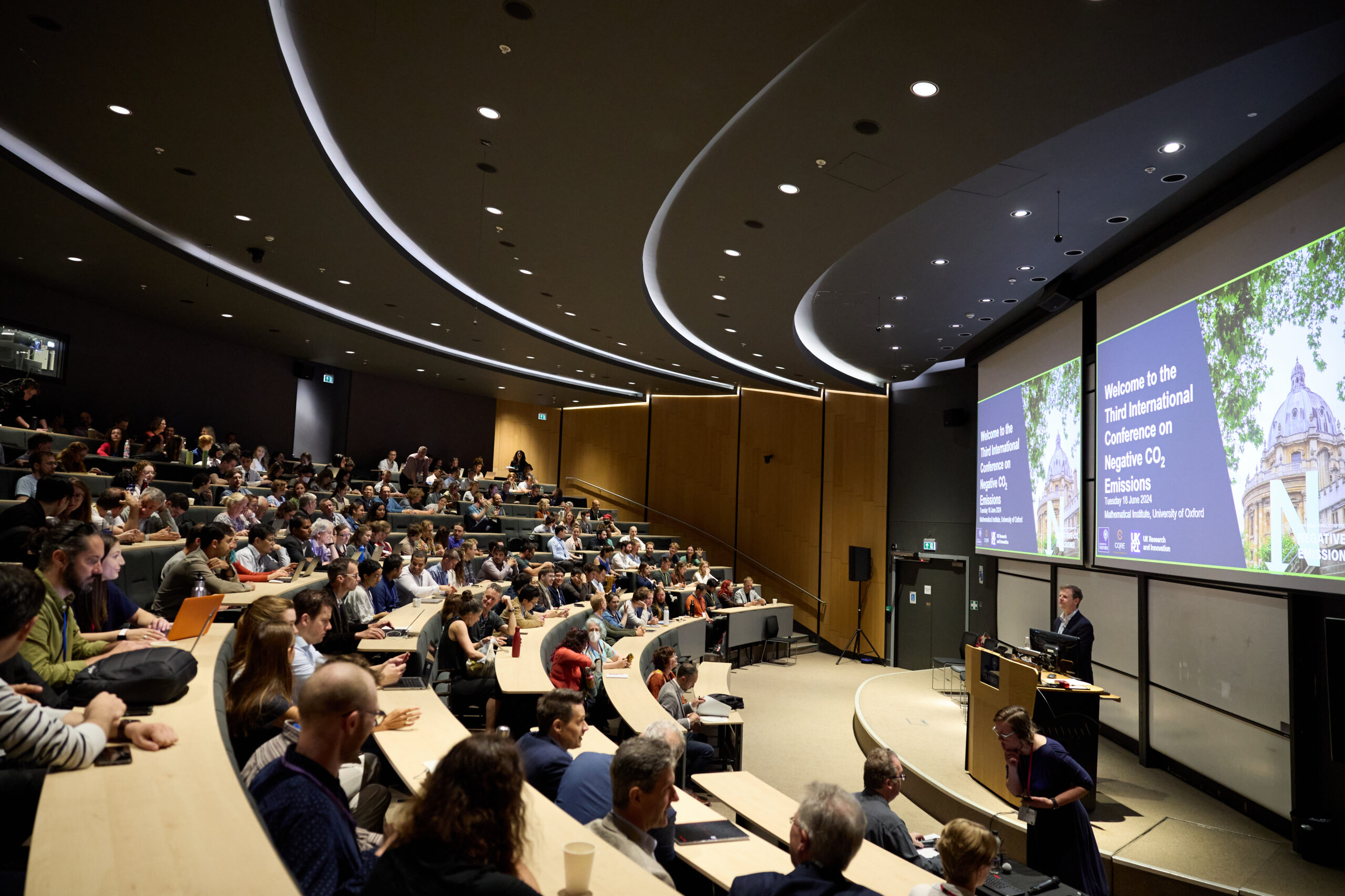
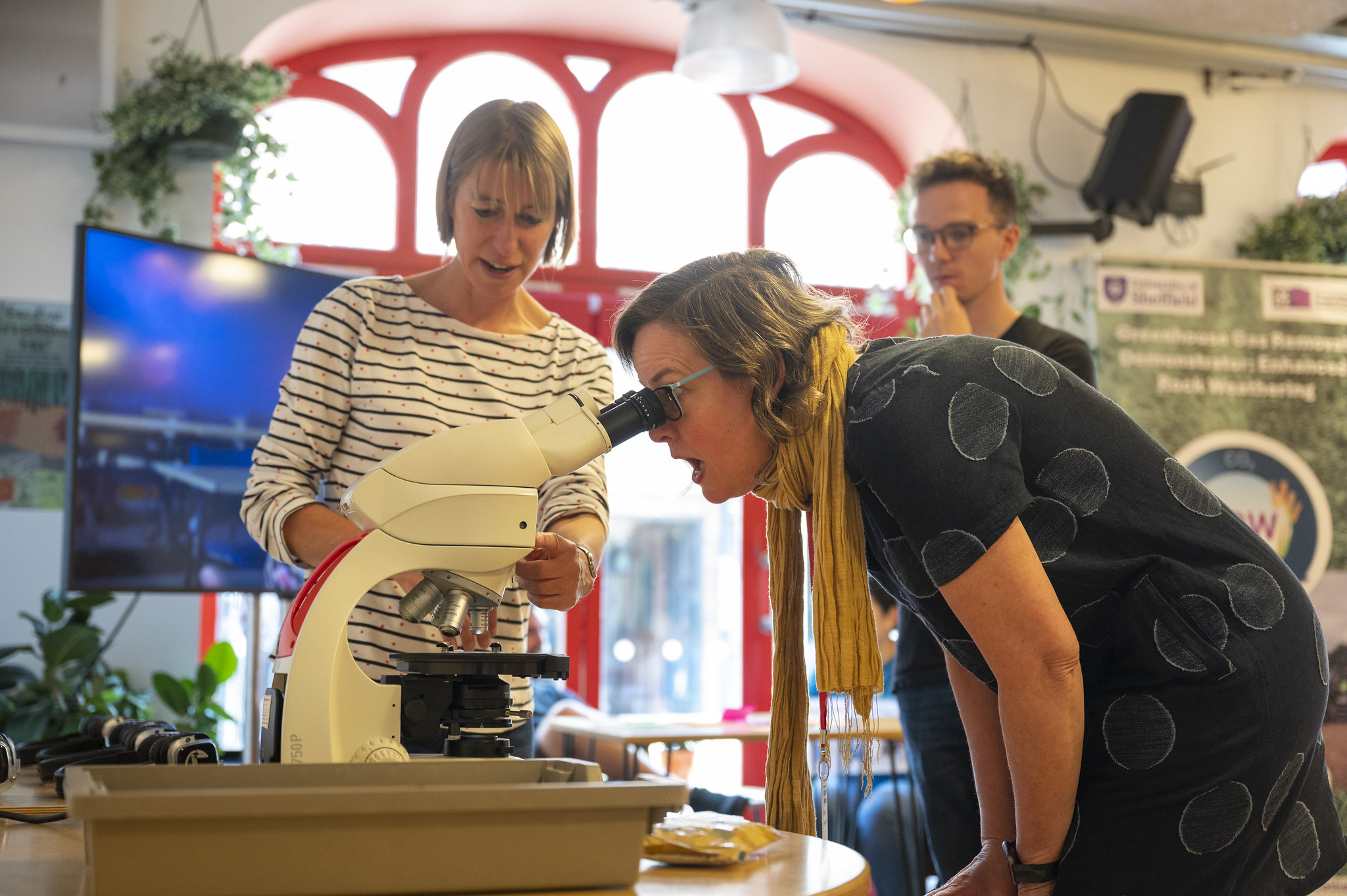
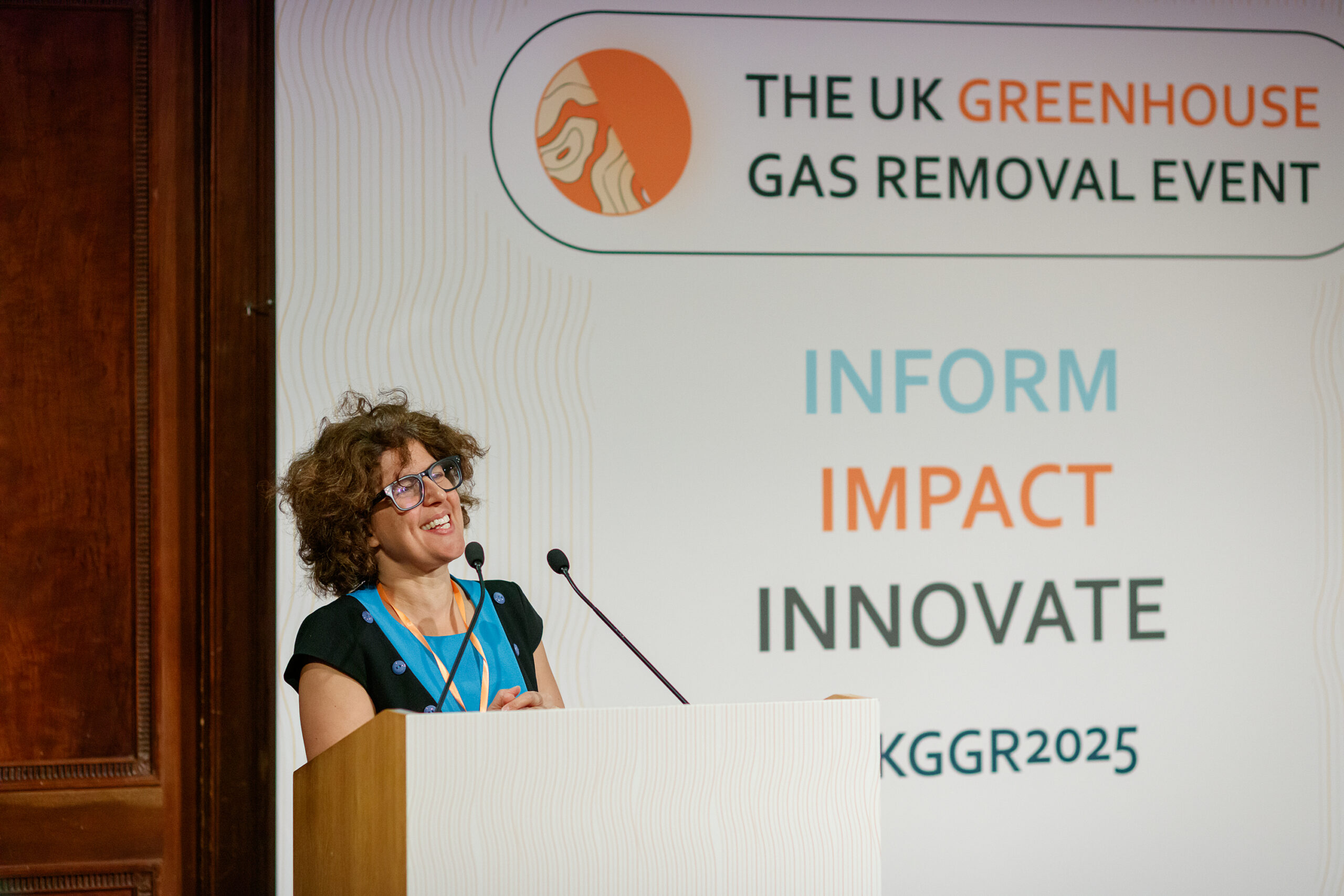
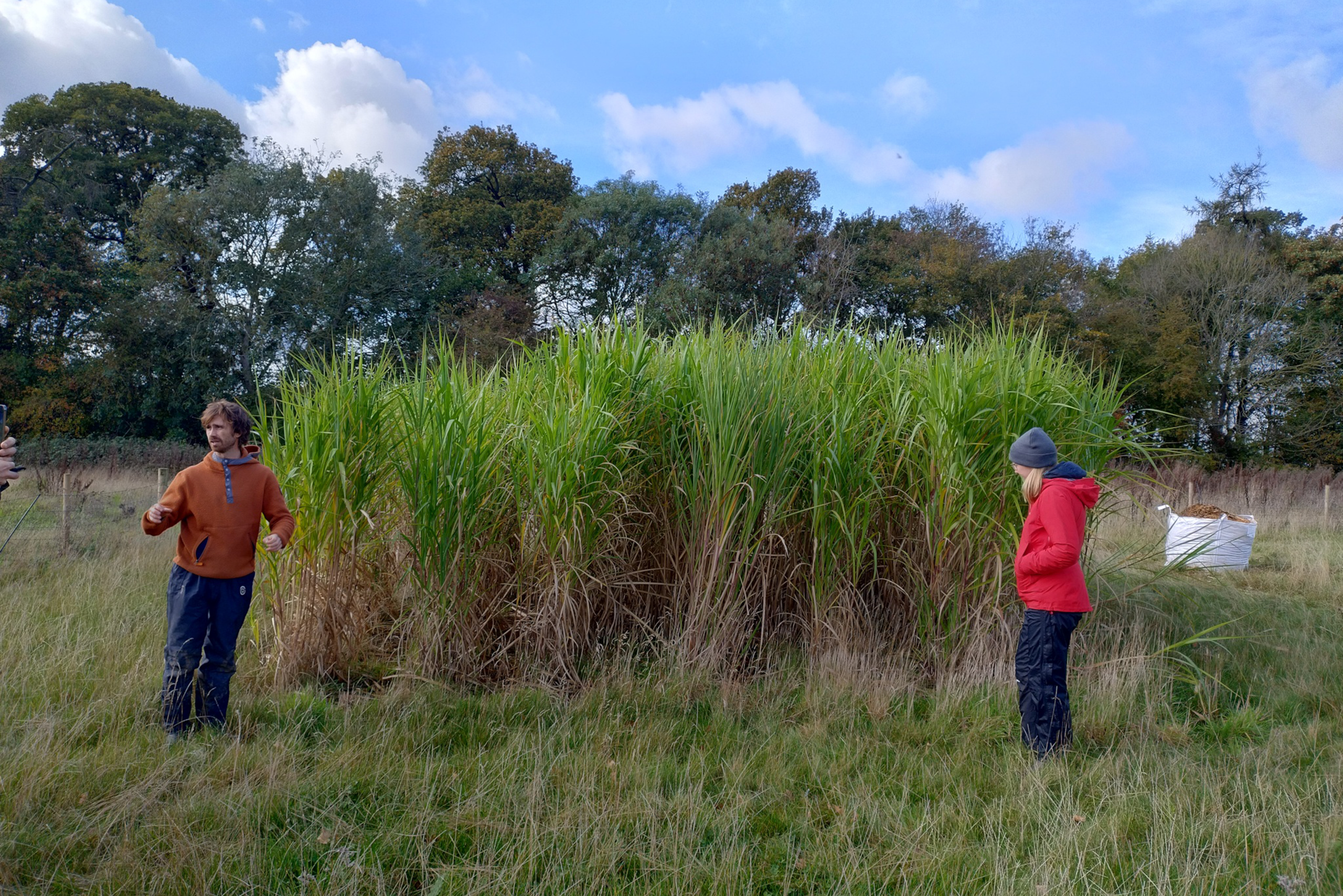

Photos: 1. Visitors to the “Reclaiming Hope, Removing Carbon” event sit near two of Billie Ireland’s biochar sculptures in a pond (credit: Hanieh Shabahang). 2. Cameron Hepburn speaks on stage at the 3rd International Conference on Negative CO2 Emissions in Oxford, June 2024 (credit: Andrew Bailey). 3. Participants at the “Goodbye Greenhouse Gas!” event in Oxford, June 2024 (credit: John Cairns). 4. Alyssa Gilbert speaks at The UK GGR Event, October 2025 (credit: Dan Weill). 5. A visit to one of the Perennial Biomass Crops Demonstrator research sites. 6. Members of the Future Leaders Network visit a GGR-Peat research site at Pwllpeiran Upland Research Centre (photos courtesy of Liubov Pankiv and amdani.co).
Innovation beyond the laboratory
Some of the most notable changes since 2021 have been happening in the innovation landscape.
CO2RE worked mainly with the five Demonstrators, testing woodland creation and management, peatland restoration, enhanced rock weathering, biochar, and perennial biomass crops. Collectively, they have substantially improved our understanding of what these methods can achieve, where their limits lie, and how they interact with soils, ecosystems, land use and existing activities.
But another part of the story has been the even-broader and ever-growing diversity of GGR possibilities. To support this we created a Pathfinder scheme for funding other GGR innovations at the pre-demonstration, proof-of-concept stage. The 13 Pathfinder projects we supported have led to five patents filed, £200k of follow-on funding (including two Bezos Earth Fund prize winners) and one honourable failure, which I think shows about the right balance of risk and reward.
Beyond publicly-funded research there is now a much wider ecosystem of carbon-removal activity. Globally, over 350 GGR start-ups were founded during 2021–25 across a variety of approaches. That diversity matters. Innovation and competition should make removal cheaper and more efficient, and can also help foster solutions with better environmental and social outcomes.
Incentives on the horizon
The policy landscape has shifted, too, albeit perhaps more slowly.
In 2021, there were few meaningful incentives for GGR in the UK beyond established support for tree planting and peatland restoration. Today, Government is developing a dedicated GGR business model alongside plans for integrating removals into the UK ETS.
These mechanisms currently cover only a subset of GGR technologies, namely BECCS and DACCS. Important questions remain over others, particularly biochar and enhanced rock weathering – should they receive government support, and if so through what mechanism? These questions are likely to be informed at least partly by parallel developments in the European Union.
There is no single policy instrument that is the right answer. In CO2RE we have therefore developed a taxonomy for evaluating policies to support carbon dioxide removal. It highlights the much wider range of tools available to governments and the trade-offs between effectiveness, efficiency, feasibility and strategic fit. No single instrument emerges as the clear best, but some may offer better fits for different policy contexts and at different stages of technology development.
Getting the measure of removals
None of this works without robust and trusted monitoring, reporting and verification — “MRV” has become one of the most-used acronyms throughout the programme.
There are now interim standards for quantifying and certifying BECCS and DACCS, produced by the British Standards Institute with input from CO2RE experts among others. Government officials more recently commissioned work directly from us to help scope standards for biochar, as they indicated an intent to extend in that direction. A big part of our emphasis has been on the importance of embedding wider environmental factors alongside the core carbon considerations.
Internationally, the Intergovernmental Panel on Climate Change (IPCC) is developing guidance for countries on how to report removals within national inventories. These inventories are the measurement bedrock on which countries set emissions pledges and assess progress towards them. Currently there are gaps in guidance for quantifying many GGR methods, so the IPCC’s advice will have an important bearing on which GGRs may contribute to national plans in future, and how.
Better evidence for better decisions
Last but not least, tools and platforms for sharing information are crucial to ensure all this evidence can actually be used by decision-makers.
CO2RE has worked to bring data from the Demonstrators into UK TIMES, the energy systems model used by the Government to assess national decarbonisation pathways. As a result, future pathways can be analysed with a broader range of GGR options, and their interactions with energy, industry, and land can be better understood.
Much time was spent throughout the project to understand the information needs across a variety of stakeholders, including NGOs, entrepreneurs, investors, regulators and market-makers. It is from this in-depth engagement that our Evaluation Framework grew, enabling a holistic way to assess which GGR approaches may scale. What also emerged was the importance of seeing the many regulations – not just the incentives, but the rules around planning, permitting, land and waste – which affect GGR projects but are often unappreciated. We mapped them for the first time.
We have launched the State of Carbon Dioxide Removal reports as a new, global resource. This idea grew out of collaborations with sister research projects in other countries. Now in their 3rd Edition, they are designed to provide a comprehensive and impartial overview that is accessible for anyone with an interest in GGR. These reports were the first to quantify how much removal is happening now, how much we might need to meet climate goals, and how far off track we currently are.
Alongside our output there has been raft of excellent resources generated by friends and colleagues, including cdr.fyi, the CDR Primer, various books, national readiness assessments and much more.
All this is only a brief highlight reel. More of our output can be found in our full publications database and collection of key reports and briefings. The CO2RE website will remain available as a public resource for the next 5 years.
I want to offer my heartfelt thanks to everyone who has been part of CO2RE. The project brought together researchers and partners with an extraordinary range of expertise. We were united by dedication, curiosity and a willingness to work across disciplinary boundaries. The result was a substantial body of evidence and a brilliant team spirit.
The next five years
Our position now looks quite different from where we started. On the one hand, there has been remarkable progress: GGR has moved from a few early-stage experiments and limited commercial activity towards a much broader landscape of field trials, start-ups, investors and emerging policy frameworks. On the other hand, many in the sector are expressing worry about a tumble down the hype curve: available finance in decline, and shifting attentions of policymakers and funders towards other priorities.
The next year or two may well see fewer startups and perhaps a dip in major research funding. But hopefully several important real GGR facilities will make it through to operation, policies to create responsible and stable demand will become a reality, and we will have the capacity to learn from these early steps and adapt.
In the longer term I suspect the salience of GGR will only increase. The United Nations now recognises that the world will cross 1.5°C. The task at hand is to limit the overshoot, and to create the possibility of bringing temperatures back down at a later date. That makes carbon removal more relevant, not less.
The essential qualification has not changed since 2021. GGR is useful only alongside very deep emissions reductions. In a flooding room, there is little point mopping the floor while leaving the taps fully open.
There is much more to do in the next five years, and it will be fascinating.
Top image by Rob Wingate on Unsplash.